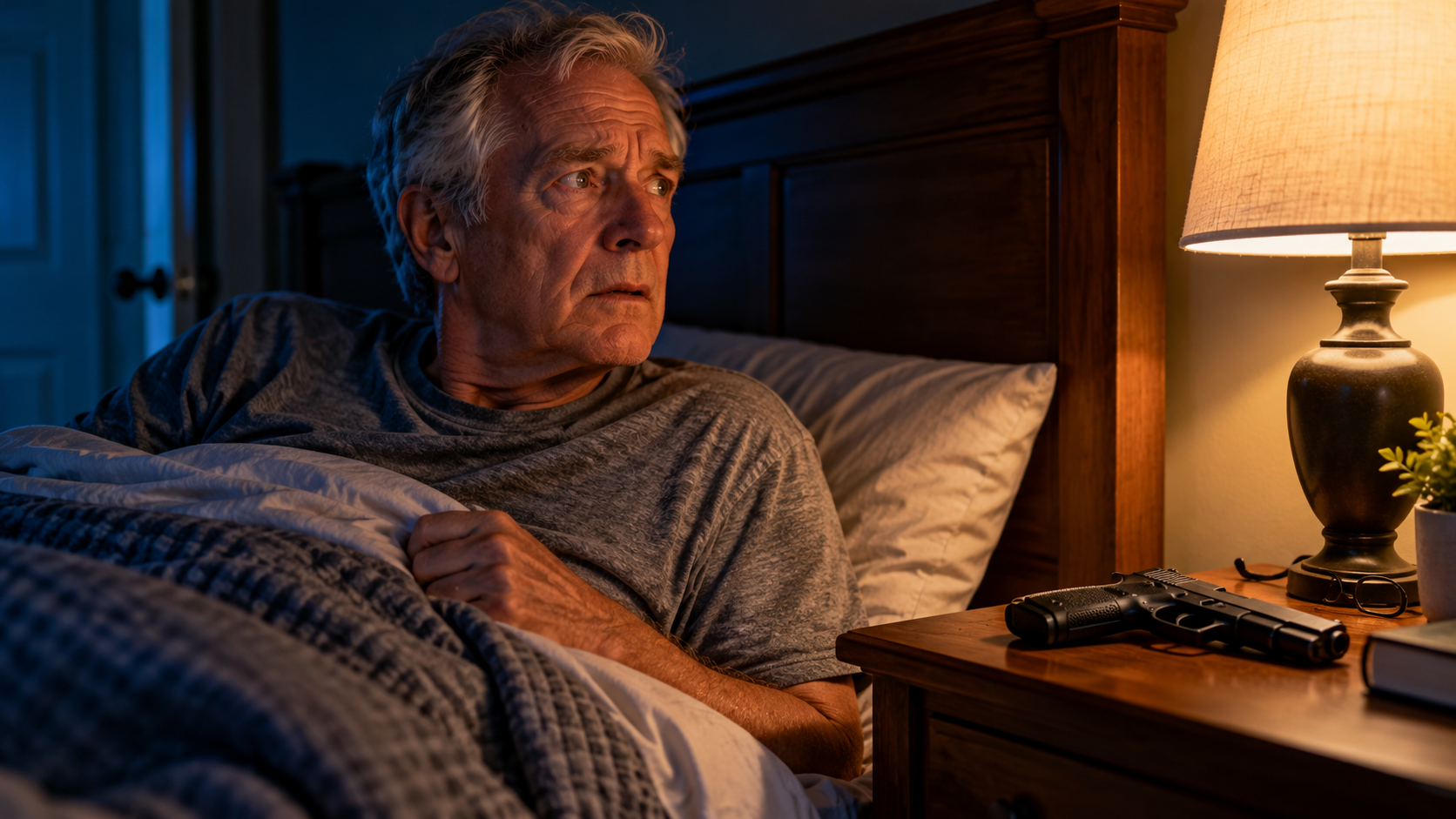
Should I get a gun in retirement?
At 66 years old, after living alone for 39 years, it’s a question I’ve thought about from time to time. Not because something frightening has happened to me, but because getting older brings up questions about personal safety that we don’t always consider when we’re younger.
What if someone breaks into my home? What if I’m confronted by an angry driver? What if I find myself in a situation where I can’t physically defend myself?
Would owning a gun make me safer?
Or could it create a danger I hadn’t considered?
For me, the biggest concern about gun ownership in retirement isn’t necessarily the firearm itself.
It’s the possibility of making the wrong decision with one.
And when you’re talking about a gun, one wrong decision could change several lives forever.
Watch the Video: Should I Get a Gun in Retirement?
In this video, I explain why I’ve never felt comfortable owning a firearm, the situations that concern me most, and why getting older hasn’t necessarily changed my thinking.
I’ve Lived Alone for 39 Years Without a Gun
Living alone isn’t something new for me.
I’ve been doing it for 39 years, and for the most part, I’ve enjoyed the independence that comes with it.
I’ve written about the unexpected power of solitude when you live alone and how being comfortable with your own company can be one of the advantages of retirement.
But enjoying independence doesn’t mean ignoring the risks that come with living alone.
Recently, I explored what happens when you get sick and live alone in retirement. That discussion raised questions about emergency planning, having someone check on you, and knowing when to ask for help.
Personal safety raises another set of questions.
What happens if someone threatens you?
And should owning a firearm be part of your retirement safety plan?
For some people, the answer is yes.
For me, it isn’t nearly that simple.
Have I Ever Owned a Gun?
Technically, yes.
When I was about 20 years old, I got married, and my brother-in-law gave my wife and me a gun.
We had it throughout our marriage, which lasted about seven years.
When we divorced, my wife kept the gun. I have no idea what happened to it afterward.
That was my entire experience with gun ownership.
I’ve never gone out and purchased a firearm for myself. I’ve never felt the need to carry one for protection, and I’ve never wanted to keep one beside my bed.
It isn’t because I’ve had some terrible experience involving a gun.
I’ve simply never been comfortable with the responsibility.
My brother and I have discussed this over the years, and I’ve consistently expressed the same concern.
What if I use a gun when I shouldn’t? Or what if I don’t use it when I should?
Those two possibilities are at the center of my hesitation.
Should Seniors Own Guns for Self-Defense?
I can understand why gun ownership might become more appealing as people get older.
At 66, I’m certainly not as physically capable as I was at 28.
I don’t have the same strength, and I’m not interested in finding out how I’d do in a physical confrontation with someone younger and stronger.
For older adults living alone, that can create a genuine sense of vulnerability.
Someone who has owned firearms for decades, received proper training, and practices safe handling might feel more secure having one available.
I respect that.
But I don’t think the decision should be based entirely on age or whether someone lives alone.
Personal comfort, training, judgment, safe storage, physical abilities, and the willingness to accept the responsibility all matter.
For me, there’s one question that I can’t easily answer.
Could I actually use a gun against another person if I believed my life was in danger?
I don’t know.
And that uncertainty bothers me.
What If Someone Breaks Into My Home?
Imagine waking up in the middle of the night and hearing someone moving around your home.
You’re startled. You’re frightened. You don’t know what’s happening.
If you own a gun, you might believe having it nearby gives you an additional way to protect yourself.
But what happens next?
How do you determine whether you’re facing a genuine threat?
What if you misunderstand what’s happening?
What if you hesitate?
I can sit here in the safety of my home and imagine how I might respond to an intruder.
But imagining a confrontation and actually experiencing one are two very different things.
Fear can affect judgment, and decisions involving deadly force can have irreversible consequences.
Training and preparation are important for anyone who chooses to own a firearm, but I still question how I would personally react.
And that brings me to one of my biggest fears.
What If I Mistake a Family Member for an Intruder?
This is something I’ve imagined even though I recognize it’s probably unlikely to happen.
Suppose I’m sleeping and someone comes into my home.
Maybe my family hasn’t been able to reach me. Maybe they’re worried something has happened.
What if my grandson or another family member comes over to check on me?
And what if I wake up confused, hear someone moving around, and mistakenly believe there’s an intruder?
If I had a gun nearby, could I react before fully understanding the situation?
The thought of accidentally harming someone I love is horrifying.
I can’t imagine having to live with that.
Now, there are precautions firearm owners can take. Secure storage, identifying a potential threat before acting, and clear communication with family members are all important.
But for me, even the possibility of making that kind of mistake is enough to make me question whether I want a firearm in my home.
Once a gun is fired, the consequences cannot always be undone.
Road Rage Is Another Reason I Don’t Want to Carry a Gun
Home security isn’t my only concern.
Road rage is another situation I’ve thought about.
We’ve all heard stories about drivers becoming angry over relatively minor incidents.
Someone gets cut off in traffic. Somebody honks their horn. Another driver takes offense.
What started as a disagreement becomes a confrontation.
Now imagine someone follows me, gets out of their vehicle, and approaches my car aggressively.
I might be frightened.
Without a firearm, my priority would be to avoid the confrontation, keep my doors locked, leave safely if possible, and contact the police if necessary.
But what if I had a gun?
Would fear cause me to misjudge the situation?
What if I believed I was about to be attacked and reacted too quickly?
Someone acting aggressively or making threats doesn’t automatically mean using deadly force is legally justified. The circumstances and applicable law matter.
And that’s what concerns me.
A split-second mistake could leave someone seriously injured or dead. It could also result in criminal charges, a civil lawsuit, or imprisonment.
I don’t want to put myself in a position where fear and access to a firearm combine to create a tragedy.
What If I Need a Gun and Don’t Have One?
Of course, there’s another side to this discussion.
What if I genuinely need to defend myself someday?
What if someone breaks into my home and threatens my life?
What if I find myself physically unable to escape a dangerous situation?
Could owning a gun make a difference?
Possibly.
That’s why I understand the reasoning of people who choose firearms for personal protection.
But owning a gun doesn’t guarantee safety.
And having one available doesn’t mean I’d necessarily be willing or able to use it effectively in an emergency.
What if I hesitate?
What if someone takes it away from me?
What if having it makes an already dangerous situation worse?
These aren’t questions I can answer with certainty.
And that’s part of why gun ownership has never appealed to me.
Does Owning a Gun Provide Peace of Mind in Retirement?
For some retirees, having a firearm provides reassurance.
They may have owned guns for most of their lives. They may enjoy target shooting or have extensive training.
They might sleep better knowing they have a way to defend themselves.
But I think I’d experience the opposite.
Knowing I had a gun in my home might give me something else to worry about.
I’d need to store it securely, prevent unauthorized access, and maintain the knowledge and ability to handle it safely.
I’d also need to consider how my abilities might change with age.
What happens if my eyesight deteriorates?
What if my reaction time slows?
What if my judgment or physical abilities change?
Those possibilities don’t mean older adults are incapable of safely owning firearms.
They do mean that anyone who owns a gun should be realistic about their abilities and responsibilities over time.
For me, the question comes down to peace of mind.
Would I feel more secure owning a gun?
Or would I feel more comfortable knowing I didn’t have one?
Right now, I think the second answer fits me better.
How Can Seniors Protect Themselves Without Owning a Gun?
Not wanting a firearm doesn’t mean I’m unconcerned about personal safety.
I want to feel secure in my home, just like everyone else.
But there are other ways to approach safety in retirement.
Some options worth considering include:
- Good-quality door and window locks
- Outdoor lighting around entrances
- Security cameras or a video doorbell
- A monitored alarm system
- Having a trusted person to contact in an emergency
- Keeping a charged phone accessible
- Avoiding confrontations whenever possible
- Creating an emergency communication plan with family members
None of these measures guarantees protection.
But neither does owning a firearm.
I’ve explored some of the practical considerations in my article about home safety and health tools for retirees living alone.
The goal isn’t to eliminate every possible danger. That’s impossible.
It’s to reduce reasonable risks while maintaining independence.
And I think that approach makes more sense for me.
Living Alone in Retirement Requires More Than Financial Planning
One thing retirement has taught me is that not every important decision involves money.
We spend years thinking about Social Security, Medicare, housing costs, and whether our savings will last.
Those things matter.
But feeling safe in your own home matters too.
So does having someone you trust who can help during an emergency.
The choices we make about where we live can influence our safety and independence as well.
In my article about renting versus owning in retirement, I discussed how the financially sensible choice isn’t always the one we emotionally prefer.
I think something similar applies to personal safety.
A decision that gives one retiree peace of mind might make another retiree uncomfortable.
And recognizing those differences is important.
Is Gun Ownership More About Responsibility Than Age?
I don’t believe turning 65 or 70 automatically means someone should buy a gun.
And I don’t believe getting older automatically means someone should give up a firearm they’ve owned safely for years.
The decision is more personal than that.
It involves experience, training, physical abilities, household circumstances, local laws, and personal judgment.
Most importantly, it involves accepting the responsibility that comes with potentially using deadly force.
That’s not a responsibility I take lightly.
I’ve written before about how retirement mistakes can become more expensive than we expect.
In that article, I was primarily discussing financial decisions.
But the underlying principle applies here too.
Some decisions have consequences that are difficult—or impossible—to reverse.
And gun ownership is one of those decisions I want to approach very carefully.
My Decision: I Don’t Think I Want a Gun in Retirement
After thinking through these situations, I keep coming back to the same conclusion I’ve held for most of my adult life.
I don’t think owning a gun is right for me.
I’m not making that decision because I’m opposed to everyone else owning firearms.
I’m making it because I know how uncomfortable I am with the possibility of having to use one.
I don’t want to hurt someone because I misunderstood a situation.
I don’t want to react out of fear and make a decision I regret for the rest of my life.
And I don’t want to own something that creates more anxiety than peace of mind.
I’ve lived alone for 39 years without feeling the need to own a gun.
Yes, I’m older now.
Yes, I recognize that I’m not as physically capable as I once was.
But getting older hasn’t changed my feelings about the responsibility of gun ownership.
For now, I’m comfortable continuing to live without one.
Frequently Asked Questions About Gun Ownership in Retirement
Should you buy a gun when you retire?
Retirement alone isn’t a reason to buy a firearm. The decision depends on your personal circumstances, experience, comfort level, willingness to obtain training, and ability to store and handle a gun safely.
Is it safe for seniors to own firearms?
Age alone doesn’t determine whether someone can safely own a firearm. Training, safe storage, judgment, physical abilities, and changes in health or cognition are important considerations.
What are alternatives to owning a gun for home protection?
Security systems, sturdy locks, outdoor lighting, cameras, emergency communication plans, and strategies for avoiding confrontation can all be part of a personal safety plan.
Does living alone mean you need a gun?
No. Living alone may make personal safety planning more important, but it doesn’t automatically mean firearm ownership is necessary or appropriate.
Can owning a gun increase anxiety?
For some people, firearm ownership provides reassurance. For others, the responsibility and potential consequences create additional worry. Personal comfort is an important part of the decision.
Final Thoughts: Would a Gun Make You Feel Safer?
I know this is a subject people have strong feelings about.
And I expect some people will disagree with my decision.
That’s okay.
I’m not trying to convince anyone that they should or shouldn’t own a gun.
I’m simply explaining why I’ve never wanted one and why getting older hasn’t changed my mind.
For me, retirement is about enjoying independence, having peace of mind, and making decisions that allow me to live comfortably.
I don’t think owning a gun would add to that peace of mind.
But I’d genuinely like to know how other retirees feel.
Do you own a gun for protection? Did you buy your first firearm after retiring? Or have you decided that gun ownership isn’t right for you?
If you live alone, does that influence your decision?
And if you enjoy these conversations about the realities of retirement, consider subscribing to my free weekly newsletter, The Trying Times.
Retirement isn’t always about finding the perfect answer. Sometimes it’s about figuring out what makes the most sense for your own life.
Thanks for reading, and as always, keep Retired and Trying.
