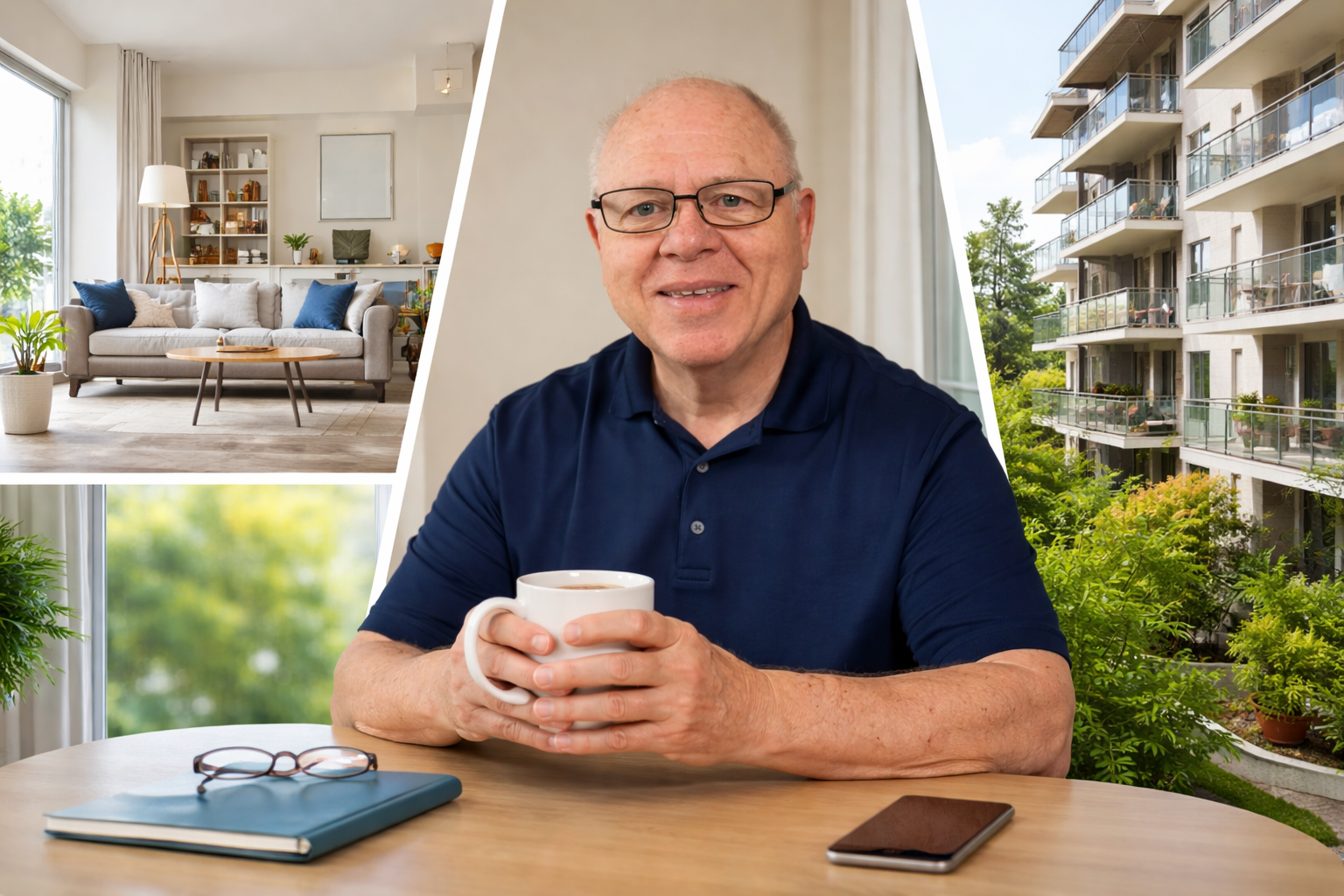
I’ll be honest with you—part of me wants to rent in retirement, even though it makes absolutely no financial sense.
And if you’ve ever had that feeling where what you want doesn’t line up with what actually makes sense, then you already understand the tension I’ve been thinking about lately, because this really isn’t just about renting versus owning—it’s about something deeper than that.
🎥 Watch the Full Video
Before I get too far into it, here’s the full video where I walk through this thought process in real time:
The Part Nobody Really Talks About
When people talk about retirement, the conversation almost always centers around the numbers—how to reduce expenses, eliminate debt, and make sure your money lasts as long as you do—and while all of that is important, it leaves out something that, at least for me, has become just as important.
Retirement decisions are not just financial decisions; they are lifestyle decisions, and sometimes those two things don’t line up nearly as cleanly as you would expect.
If you’ve ever looked at your situation and thought, “This makes perfect sense on paper, but it doesn’t feel right,” then you’re already dealing with the same kind of reality I talked about in How to Live Well on a Retirement Budget: Frugal Tips That Don’t Feel Like Sacrifice, where the numbers matter, but how your day-to-day life actually feels matters just as much.
Why Renting Starts to Feel So Appealing
There’s something about renting that feels lighter, and it’s not really about the apartment itself as much as it is about what it represents, because once you step away from a lifetime of work, schedules, and responsibilities, the idea of being tied to anything—even a place you own outright—can start to feel heavier than it used to.
What renting offers, at least in your mind, is flexibility and a kind of freedom that’s hard to ignore, because if something breaks it’s not your problem, if the area changes you’re not locked into it forever, and if you wake up one day and feel like living somewhere else, you can actually do that without having to unwind your entire life first.
And once you start thinking that way, it’s hard not to go a little further with it, imagining what it might feel like to spend a few months somewhere new, or to not feel tied to the same place year after year, especially when retirement is supposed to be the time when you finally have that kind of freedom.
Then Reality Has a Say
The problem, of course, is that reality doesn’t care about how something feels.
In my case, I already own my condo outright, which means there’s no mortgage and my housing costs are about as predictable as they can be, and when most of your income is fixed, that kind of predictability isn’t just nice to have—it’s a big part of what keeps everything else working.
That’s something I’ve come back to over and over again, not just in this situation but in how I’ve approached simplifying things in general, because once you remove large, unpredictable expenses, it takes a lot of pressure off the rest of your financial life.
Owning gives me stability, while renting would introduce a level of uncertainty that didn’t matter nearly as much when I was working but matters a lot now, because there’s no longer a paycheck waiting to make up the difference if costs start creeping up.
The Advice That Sounds Good (But Isn’t Always Yours)
You hear it all the time—people saying that renting is better and that you shouldn’t tie your money up in a home—and to be fair, there are situations where that advice makes complete sense, especially if someone is dealing with a large house, constant repairs, or expenses that are getting harder to manage.
But what I’ve noticed is that a lot of the people giving that advice are coming from a completely different place financially, where rising rent or changing costs don’t carry the same weight because they have more flexibility and more room to absorb those changes.
And that’s the part that gets lost, because advice that works perfectly for someone else doesn’t automatically translate to your situation, especially when you’re living on a fixed income and the margin for error is a lot smaller.
Where the Real Conflict Shows Up
What this really comes down to is the tension between two things that both matter, because on one side you have financial stability, low costs, and predictability, and on the other side you have a desire for freedom, flexibility, and sometimes just a change in environment.
Neither side is wrong, which is what makes the decision so difficult, because it’s not about choosing between a good option and a bad one—it’s about choosing between two things that both have real value.
When “Settled” Starts Feeling Different
One thing I’ve started to notice is that you can be in a situation that makes perfect sense and still feel a little off, not because anything is actually wrong, but because the environment you’re in no longer feels quite right for where you are in life.
That feeling is hard to explain, but it’s similar to what I’ve talked about before when it comes to the quieter side of retirement—the days where nothing is technically wrong, but something still feels slightly out of place—and when you’re spending more time at home, those small things become more noticeable.
It might be the noise, the area, or just the overall feel of where you live, but whatever it is, it starts to matter more than it used to.
Looking for a Middle Ground
For a while, I thought this was one of those decisions where you had to go all in one way or the other, either staying exactly where you are or making a complete change and starting over somewhere else.
But the more I’ve thought about it, the more I’ve started to question whether it really has to be that extreme, because what if the real solution isn’t about changing where you live full-time, but about changing how you use the flexibility you already have?
A Different Way to Look at It
Instead of giving up the stability that comes with owning, it might make more sense to build some flexibility into your life in smaller ways, like traveling more often, spending time in different places, or simply breaking up the routine enough to change how things feel without changing the foundation underneath it.
Because when I really step back and look at it honestly, what I’m drawn to isn’t renting itself—it’s the feeling I think renting would give me, which is really about freedom, change, and a different environment.
And once you see it that way, it opens up a completely different set of options that don’t require you to give up what’s already working.
Where I’ve Landed (For Now)
At least for now, I’m staying where I am, not because it’s perfect or exciting, but because it makes sense and gives me a level of stability that’s hard to replace, especially at this stage of life.
At the same time, I’m not ignoring the part of me that wants something different; I’m just trying to find a way to meet it halfway by creating change in smaller, more intentional ways instead of making one big decision that affects everything.
The Real Lesson
One thing I’m starting to accept is that not everything in retirement has a clean answer, and not every decision is going to line up perfectly between what makes sense financially and what feels right personally.
Sometimes the best you can do is find a balance between the two and give yourself permission to adjust along the way, because if you’ve ever felt that pull between what you want and what makes sense, you’re not alone—I’m right there with you, figuring it out one decision at a time.
More Real Retirement Conversations
If this kind of honest, real-world look at retirement resonates with you, you might want to check out 15 Simple Ways to Lower Monthly Expenses in Retirement, where I break down what day-to-day life actually looks like on a fixed income, or even something like Treadmill for Seniors at Home, which touches on staying active without overcomplicating things.
And if you want to support what I’m doing here, you can always check out the Buy Me a Coffee page, where I share more of what I’m learning along the way.
Final Thought
Retirement isn’t just about getting the math right—it’s about building a life that actually feels right, even when those two things don’t line up perfectly, and learning how to live with that tension might be one of the most important parts of the whole process.
