Sometimes, after paying my bills, I have a little extra money left over.
And lately, I’ve been asking myself a question I never expected to be asking at this age.
Should I start investing at 66, or should I use that extra money to enjoy the retirement I’m already living?
I’m getting ready to turn 67. I don’t have a retirement investment portfolio, and I don’t have a big nest egg sitting somewhere waiting for me to withdraw from it.
We’re always told that by the time we retire, we should have spent decades investing and building enough savings to support us for the rest of our lives.
Well, I didn’t.
And yet, here I am, retired and managing my finances.
So instead of looking backward and worrying about what I should have done 30 years ago, I’m thinking about what makes sense today.
Watch the Video: I’m 66. Why Would I Start Investing Now?
In this video, I talk about whether it makes sense to begin investing when you’re already retired, especially if you never accumulated a traditional retirement nest egg.
It’s not about telling anyone to stop investing. It’s about deciding how to balance financial security with enjoying the years ahead.
What If You Retire Without a Nest Egg?
A lot of retirement advice starts with the assumption that everyone has investments.
You’ll hear discussions about withdrawal rates, portfolio allocations, and how to make your retirement savings last 30 years.
But what about people who don’t have those savings?
Some retirees live primarily on Social Security. Others have a small pension or continue earning a little money through part-time work.
Some still have mortgages. Others rent their homes and will probably continue paying rent for the rest of their lives.
Does that mean they never get to enjoy retirement?
I explored a similar question in How Much Money Do You Really Need to Retire?. The answer depends heavily on your income, housing costs, debts, and everyday expenses.
There’s a tremendous difference between someone receiving $3,000 a month who owns an inexpensive home and someone receiving $1,500 a month who pays $1,200 in rent.
The size of your investment portfolio doesn’t tell the entire story.
Neither does the absence of one.
Should You Invest Extra Money After Retirement?
Let’s say you’re already retired.
Your Social Security or other retirement income covers your normal living expenses. You’re managing your bills, and some months you have a little extra money.
What should you do with it?
You could invest it.
You could put it into a savings account.
You could pay down debt.
Or you could use some of it to take a vacation, enjoy a hobby, or spend time doing something special with your family.
I don’t believe there’s one answer that works for everybody.
If you have no emergency savings, building a financial cushion might be your most important priority.
If you’re carrying expensive debt, reducing that balance could improve your financial situation.
But if those responsibilities are being handled, I think there’s another consideration worth discussing.
At what point do we stop preparing for retirement and start enjoying the retirement we already have?
That question becomes more meaningful to me with every passing year.
My First Priority Is Still Financial Security
I’m not suggesting that retirees should spend every dollar left over at the end of the month.
I certainly don’t intend to.
I still have financial responsibilities, including debt I’m working to eliminate. I also want to increase my emergency savings.
In fact, I wrote about how I went from being debt-free at 56 to carrying debt again in retirement.
Paying down that debt matters to me because I want fewer financial obligations, not more.
And the extra money I earn isn’t guaranteed.
My YouTube channel has created some additional income, but that income changes from month to month. As I explained in YouTube Income in Retirement: What I Actually Kept, earning additional money doesn’t mean all of it is available to spend.
That’s why I don’t want to build my essential monthly expenses around unpredictable income.
But once my obligations are covered and I’ve set money aside for emergencies, I also don’t want to feel guilty about enjoying some of what’s left.
Retirement Doesn’t Require a Paid-Off House
Housing is another reason this question matters to so many retirees.
We’re often told that we should enter retirement with our homes paid off.
And yes, eliminating a mortgage can make retirement much easier financially.
But plenty of people retire with mortgage payments.
Others rent.
For those who rent, there’s no magical date when the monthly housing payment disappears.
Does that mean they’re never supposed to take a vacation or enjoy an occasional luxury?
Of course not.
They still need to live within their means, and housing affordability is a serious issue. But having an ongoing housing expense doesn’t automatically mean someone can’t enjoy retirement.
I’ve wrestled with housing decisions myself, including whether renting or owning makes more sense in retirement.
My own experience has taught me that financial decisions aren’t always as simple as following a rule someone else established.
What works for one retiree might be completely unrealistic for another.
At 66, Time Matters as Much as Money
Here’s where my thinking has really started to change.
When you’re younger, you have decades to save and invest.
At 66, getting ready to turn 67, I look at things differently.
Hopefully, I’ve got many more years ahead of me.
But I also recognize that being alive at 80 and being physically able to do everything I enjoy today are two different things.
In 2024, I walked the Camino de Santiago.
It was an experience I’d love to repeat.
But walking that distance requires physical ability, and I can’t assume I’ll always be able to do it.
If I have the money available for another Camino trip, after taking care of my financial responsibilities, should I invest it and hope to use it years from now?
Or should I take the trip while I’m confident I can still enjoy it?
That’s not an easy decision.
And it doesn’t have to involve an international trip.
Maybe you’ve always wanted to take a cruise.
Maybe you’d like to visit relatives you haven’t seen in years.
Maybe you’d like to take your grandchildren somewhere special.
Or maybe your idea of enjoying retirement is simply having enough extra money to go out for dinner without worrying about the cost.
Those experiences have value, too.
Not everything that makes retirement worthwhile shows up on a financial statement.
Is It Too Late to Start Investing at 66?
No. Being 66 doesn’t automatically make investing a bad idea.
Someone who is 66 today could live another 20 or 30 years.
Inflation can reduce purchasing power, and investments may help support future spending needs.
But investing also involves risk, and money you expect to need soon may be better kept in more accessible, lower-risk savings.
The right decision depends on several things: how much dependable income you have, your emergency reserves, outstanding debts, investment time horizon, and how comfortable you are with financial risk.
For someone with significant extra income, investing part of it while enjoying the rest could make sense.
For someone with very little left over, strengthening their emergency savings might be more important.
And for someone whose basic financial needs are secure, using some discretionary money for experiences today may be a reasonable choice.
There’s no universal rule that says every extra dollar must be invested.
There’s also no rule that says investing stops making sense once you retire.
The important thing is understanding what you want your money to accomplish.
Enjoying the Retirement You Actually Have
I think we sometimes spend too much time comparing our retirement with the retirement we’re told we’re supposed to have.
A paid-off house.
A substantial investment portfolio.
Enough savings to travel whenever we want.
Those are wonderful things to have.
But not everybody reaches retirement in that position.
I previously wrote about retiring without savings and how my everyday life changed less than I expected.
One thing I’ve come to appreciate is that a satisfying retirement doesn’t necessarily require the financial circumstances we imagined when we were younger.
It requires finding a way to live within our means while making room for the things that matter to us.
For some people, that’s travel.
For others, it’s family, hobbies, friendships, or simply having control over their time.
And sometimes, enjoying retirement means being content with a quiet day at home and not spending anything at all.
My Decision About Investing at 66
So am I going to start building an investment portfolio now?
At this point, I don’t think that’s where my extra money is going to go.
My priorities are paying down my remaining debt and increasing my emergency savings.
After that, I’d like to use some of my extra money to enjoy retirement.
Maybe another Camino.
Maybe a vacation with my grandchildren.
Maybe something I haven’t even thought about yet.
I’m not saying that’s the right choice for everybody.
It’s simply how I’m looking at my own situation.
Because here’s the conclusion I’ve reached:
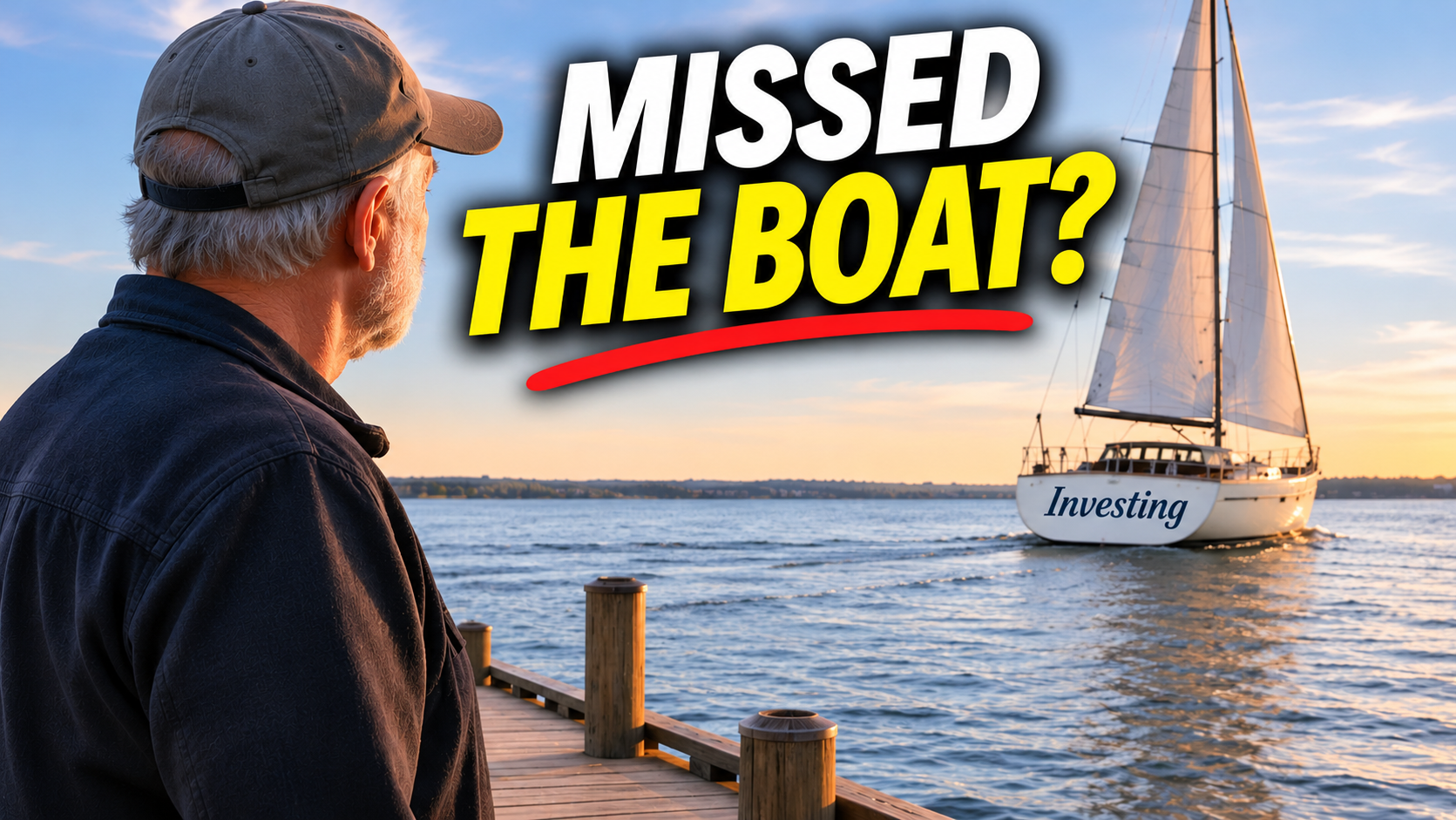
I missed the boat when it came to investing for retirement. But I’m not going to miss retirement itself trying to catch up.
What Would You Do?
I’m curious how other retirees look at this question.
If you’re already retired without an investment portfolio, and you occasionally have money left over after paying your bills, would you start investing it now?
Or would you use some of that money to enjoy your retirement?
And if you do have retirement investments, have you found it difficult to make the transition from saving money to actually spending it?
I’d love to hear your experience in the comments.
After all, retirement isn’t just about how much money we have.
It’s also about what we do with the time we have.
This article reflects my personal retirement experience and opinions. It is not individualized financial advice. Investment decisions should reflect your own finances, risks, and long-term needs.
