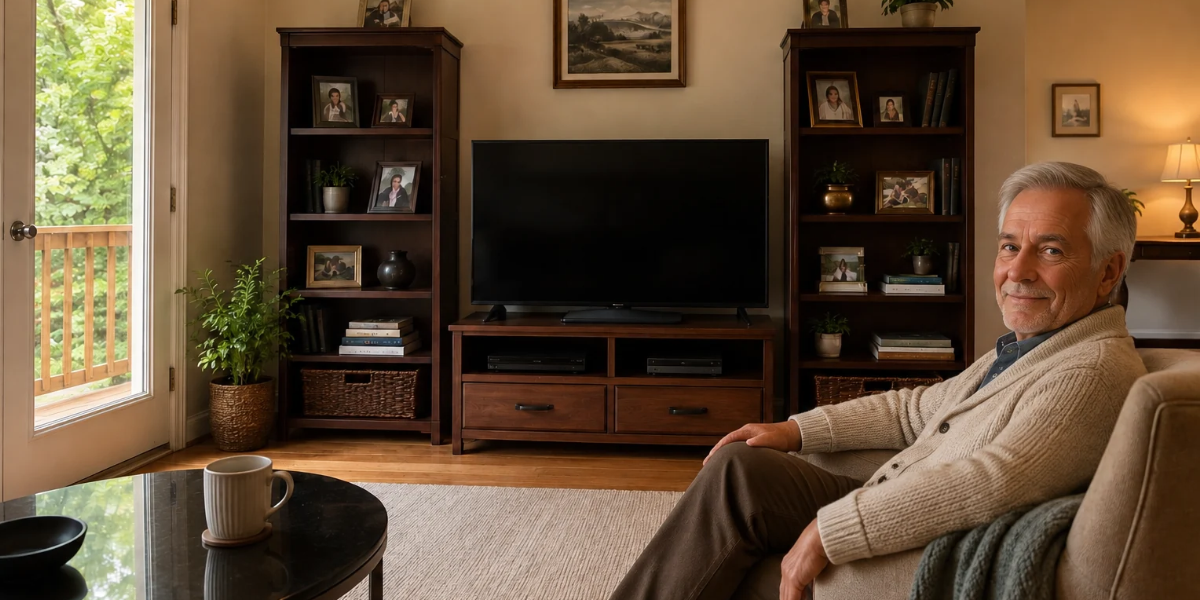
I hear people say they’re introverts, and I think to myself, hold my beer.
I’ve lived alone for 39 years. I’ve never been somebody who needed a lot of people around me, and I’ve never had a problem entertaining myself.
So when I hear people talking about how difficult retirement can be because you lose all that social interaction from work, I have to laugh.
That was one of the things I was looking forward to!
We’re constantly told that a happy retirement means staying busy, making friends, joining clubs, volunteering, and getting involved in the community.
But what if you’re perfectly happy spending time alone?
What if you don’t need a calendar full of activities to enjoy your retirement?
After ten years of retirement, I’ve come to believe that being an introvert can actually be a tremendous advantage.
And I think I’ve got enough experience being one to explain why.
Watch: Why Introverts Actually Win in Retirement
In this video, I share some of my experiences as a lifelong introvert, including the things I hated about working, why I never missed the social interaction after retiring, and why I’ve always been perfectly comfortable living alone.
I Was an Introvert Long Before Retirement
I didn’t become an introvert when I retired.
I’ve always been this way.
When I was working, I hated company Christmas parties, business dinners, and those get-togethers where everybody was expected to show up and have a wonderful time.
It wasn’t that I disliked the people I worked with.
I just didn’t particularly want to spend my free time socializing with them.
I’d already spent eight or nine hours at work. Why would I want to spend another three hours talking about work?
I wanted to go home.
And some of my responsibilities made that difficult.
As a product engineer, I sometimes had to entertain vendors, go out to lunch or dinner, and make conversation.
I also had to give plant tours.
Here’s the unfortunate part.
Apparently, I was pretty good at giving those tours because they kept asking me to do them.
Just because you’re good at something doesn’t mean you enjoy it.
I could handle those situations. I could be professional, explain complicated things, and interact with people.
But that didn’t mean I wanted to do it.
In fact, I wasn’t particularly interested in unnecessary conversation.
I remember salesmen coming to me with a product idea and asking, “Can we make this?”
I’d say, “No.”
Then they’d stand there waiting for an explanation.
As far as I was concerned, I’d already answered the question.
Of course, they needed more information to explain the decision to their customers.
But my natural inclination was to give the shortest possible answer and move on.
Maybe that’s not strictly an introvert thing. Maybe that’s just me.
Either way, I was never somebody who needed constant conversation.
Retirement Finally Eliminated the Forced Socializing
One of the things retirement experts frequently warn people about is losing the social connections they had at work.
They talk about missing coworkers, workplace friendships, daily conversations, and the sense of belonging that comes from being part of a team.
I understand why those things matter to some people.
But when I retired, I didn’t miss any of them.
Not the Christmas parties.
Not the vendor dinners.
Not the business lunches.
And certainly not the plant tours.
I was perfectly happy to leave all of that behind.
Ten years later, I still don’t miss it.
For me, retirement wasn’t about learning how to live without workplace social interaction.
It was about finally being free of social obligations I never particularly enjoyed.
And that freedom has been one of the greatest benefits of retirement.
I’ve written about this before in Please Don’t Invite Me. I Don’t Want to Put Pants On.
It turns out that having nowhere you have to be is a pretty wonderful feeling.
Especially when you’ve spent decades going places because somebody else expected you to.
Why Introverts May Adjust More Easily to Retirement
Retirement creates a dramatic change in how we spend our time.
One day, you’re working, following a schedule, interacting with coworkers, and dealing with responsibilities.
Then suddenly, you have an enormous amount of free time.
For some people, that can be difficult.
They miss the structure. They miss the conversations. They miss having somewhere to go every morning.
And they have to figure out how to replace those things.
But someone who already enjoys spending time alone may have a different experience.
I didn’t need to learn how to entertain myself.
I’d been doing that my entire adult life.
I didn’t need to find people to spend time with every day.
I was perfectly happy spending time by myself.
And I didn’t need to create a busy schedule to feel like I was accomplishing something.
Sometimes I enjoy having absolutely nothing planned.
That’s not to say every introvert adjusts easily to retirement or that extroverts necessarily struggle.
Personality is only one part of the picture.
But I do think being comfortable with solitude gives you a head start.
When you’re already happy with your own company, retirement doesn’t necessarily create an empty space that needs filling.
It creates more time to enjoy the life you already prefer.
Being Alone in Retirement Isn’t the Same as Being Lonely
This is probably one of the biggest misunderstandings about people who enjoy living alone.
Some people assume that if you’re alone, you must be lonely.
But those are two completely different things.
I’ve lived alone for 39 years.
I enjoy my independence.
I like getting up in the morning, making my coffee, and deciding what I want to do that day.
If I want to take a walk, I take a walk.
If I want to work on my YouTube channel, I work on my YouTube channel.
And if I want to take an afternoon nap, I don’t need anybody’s permission.
There’s something wonderful about having that kind of freedom.
I don’t need somebody sitting across the table from me to enjoy my morning coffee.
And I don’t need a packed social calendar to feel like I’m living a meaningful life.
In The Unexpected Power of Solitude When You Live Alone, I explored how spending time alone can become something positive rather than something that needs to be fixed.
That’s an important distinction.
Loneliness is the feeling that you’re missing the connection you want.
Solitude can be something you deliberately choose and enjoy.
You can be surrounded by people and still feel lonely.
And you can spend an entire afternoon alone and be perfectly content.
I’ve experienced enough years of living alone to know that the two aren’t interchangeable.
Introverts Don’t Necessarily Need a Busy Retirement
Something that always makes me smile is how much retirement advice focuses on staying busy.
Join a club.
Take a class.
Volunteer.
Get involved.
Make new friends.
Find activities.
Now, if those things make you happy, that’s wonderful.
But why does everybody assume that retirement needs to be filled with activities?
I spent decades working.
I think I’ve earned the right to have a day when I don’t accomplish much of anything.
Some mornings, I get up, have my coffee, and see where the day takes me.
Maybe I’ll work on a video.
Maybe I’ll go for a walk.
Maybe I’ll do absolutely nothing exciting.
And I’m perfectly happy with that.
I don’t feel the need to prove that I’m enjoying retirement by telling people how busy I am.
In fact, I’ve discovered that simplifying my life and having fewer obligations often makes me happier.
That’s something I explored in Simplify Life in Retirement: 6 Things I Gave Up.
Sometimes having less to do is exactly what makes retirement enjoyable.
You Can Be Socially Capable and Still Be an Introvert
Here’s something I find funny.
My daughter tells me she’s an introvert.
And my first thought was, what?
You’ve got more friends than I know people!
She’s got an active social life, and from my perspective, she seems perfectly comfortable around others.
But then I started thinking about my own working years.
I could give plant tours.
I could entertain vendors.
I could attend business dinners.
I didn’t enjoy those things, but I could do them.
So maybe she’s the same way.
Maybe she enjoys spending time with her friends but still needs quiet time afterward.
Having a lot of friends doesn’t automatically make someone an extrovert.
And being an introvert doesn’t mean you dislike people.
Generally speaking, introverts tend to prefer less social stimulation and may find solitude restorative.
Some are shy. Some aren’t.
Some have large groups of friends. Others prefer a few close relationships.
And some of us have spent nearly four decades living alone and think we’re pretty good at it.
Although I still think my daughter has a long way to go before she catches up with her old man.
One of Retirement’s Greatest Benefits Is the Freedom to Say No
During your working years, you don’t always get to decide how you spend your time.
If your boss schedules a meeting, you attend.
If a vendor comes to visit, you entertain them.
If someone needs a plant tour, apparently you’re giving another plant tour.
Retirement changes that.
You suddenly have much more control over your schedule.
And for an introvert, that can be a tremendous relief.
I don’t have to attend social events just because somebody expects me to.
I don’t have to fill my calendar with activities because somebody thinks that’s what retired people should do.
And I don’t have to apologize for preferring a quiet afternoon at home.
I can simply say no.
Not because I’m angry.
Not because I dislike people.
But because I genuinely enjoy spending time by myself.
I’ve come to appreciate that having control over my time is just as important as many of the financial benefits of retirement.
It’s one of the reasons I wrote about Why I Will Not Get a Job in Retirement.
Even when additional income would be useful, I’m reluctant to give up the freedom I’ve worked so long to enjoy.
Money matters, but so does having control over your own life.
The Downsides of Being Alone in Retirement
Now, I don’t want to make it sound like being an introvert makes retirement perfect.
It doesn’t.
And living alone does come with some challenges.
As I’ve gotten older, I’ve started thinking more seriously about what happens if I become sick or need help.
What happens if I fall?
What happens if I’m seriously ill and nobody knows?
What happens if I need someone to take me to a medical appointment?
These are legitimate concerns, regardless of how much you enjoy solitude.
I explored some of those questions in What Happens When You Get Sick and Live Alone in Retirement?.
The reality is that enjoying your independence doesn’t mean you never need other people.
I have my daughter and my grandkids, and they’re an important part of my life.
I enjoy spending time with them.
And knowing I have family nearby is reassuring.
There’s a big difference between enjoying solitude and isolating yourself completely.
You can be an introvert and still maintain meaningful relationships.
You can enjoy living alone while recognizing the importance of having people you can depend on.
In fact, I think that becomes increasingly important as we get older.
The goal isn’t to avoid people entirely.
It’s to have the freedom to choose the relationships and activities that matter most to you.
Frequently Asked Questions About Introverts in Retirement
Are introverts happier in retirement?
Not necessarily. Retirement happiness depends on many things, including health, finances, relationships, personality, and personal expectations. However, introverts who enjoy solitude may find it easier to adjust to having fewer daily social interactions.
Is it normal to enjoy being alone in retirement?
Absolutely. Some retirees enjoy large social circles and busy schedules, while others prefer quieter days and more independence. Neither approach is inherently better. What matters is whether your lifestyle meets your needs.
Can you be an introvert and still enjoy spending time with people?
Yes. Introverts can have close friendships, active social lives, and strong family relationships. Introversion doesn’t mean disliking people. It often means preferring quieter environments or needing time alone after extended social interaction.
How can introverts avoid isolation in retirement?
Maintaining a few meaningful relationships, staying in touch with family or friends, and having a plan for emergencies can help. You don’t need a large social circle, but having people you trust and can call when needed is important.
Do introverts need hobbies in retirement?
Hobbies can provide enjoyment and purpose, but there’s no requirement to fill every day with structured activities. Reading, walking, gardening, creative projects, and quiet routines can all be satisfying ways to spend retirement.
Final Thoughts: Retirement Finally Lets Me Be Myself
When I think about why I’ve enjoyed retirement so much, I keep coming back to one simple thing.
I can finally live the way I’ve always preferred to live.
I don’t have to attend Christmas parties.
I don’t have to entertain vendors.
I don’t have to give plant tours.
And I don’t have to explain why I’d rather spend an afternoon at home than attend some social gathering.
I can just be myself.
After spending decades doing things because somebody else expected me to, that’s a wonderful feeling.
So when I say introverts actually win in retirement, I’m not suggesting we’re better than extroverts.
I’m saying retirement can be especially rewarding for people who are already comfortable spending time alone.
We don’t necessarily need to reinvent ourselves.
We don’t have to become more social just because somebody thinks that’s what retirement requires.
We can finally spend our time doing what makes us happy.
And sometimes, what makes us happy is simply being left alone.
What about you?
Are you an introvert or an extrovert? Did retirement make you happier because you finally had more time to yourself, or do you miss the social interaction from working?
I’d love to hear your experiences in the comments.
Because I suspect there are a whole lot of us who are perfectly happy sitting at home, enjoying our coffee, and minding our own business.
And if you’re one of them, welcome to the club.
Don’t worry.
We won’t be having any meetings.
