People often say that if housing is too expensive in retirement, you should simply move somewhere cheaper. On the surface, that sounds sensible. Find a town with lower rent, pack your belongings, and enjoy the savings.
But inexpensive housing and desirable housing are not always the same thing.
I was reminded of that during a recent road trip to Pennsylvania. Along the way, I investigated affordable apartments in Cambridge, Ohio, visited the campground where my brother and his wife live full-time, and toured the walkable neighborhood where they previously rented an apartment.
I encountered three very different approaches to affordable living. The experience reinforced something I have come to believe: retirement housing is not only about finding the lowest price. It is about finding a lifestyle that fits you.
Looking for Affordable Apartments in Cambridge, Ohio
I spent a night in Cambridge on my way to Pennsylvania. Because retirees are so often advised to relocate to a less expensive area, I decided to see what the local apartment market offered.
I did find low advertised prices. One apartment community showed rent starting at approximately $493 per month. Another had a reported average rent of about $761. However, both appeared to involve income-restricted or subsidized housing.
More importantly, I could not find the kind of modern, well-maintained apartment community where I would personally want to live. Downtown Cambridge was pleasant, but some of the surrounding areas looked fairly run-down to me.
My conclusion was simple: I found affordable housing, but I did not find housing that was both affordable and desirable for me.
That distinction matters. As I discussed in Retirement Housing Options When Money Is Tight, a lower monthly payment does not automatically make a housing choice practical, comfortable, or sustainable.
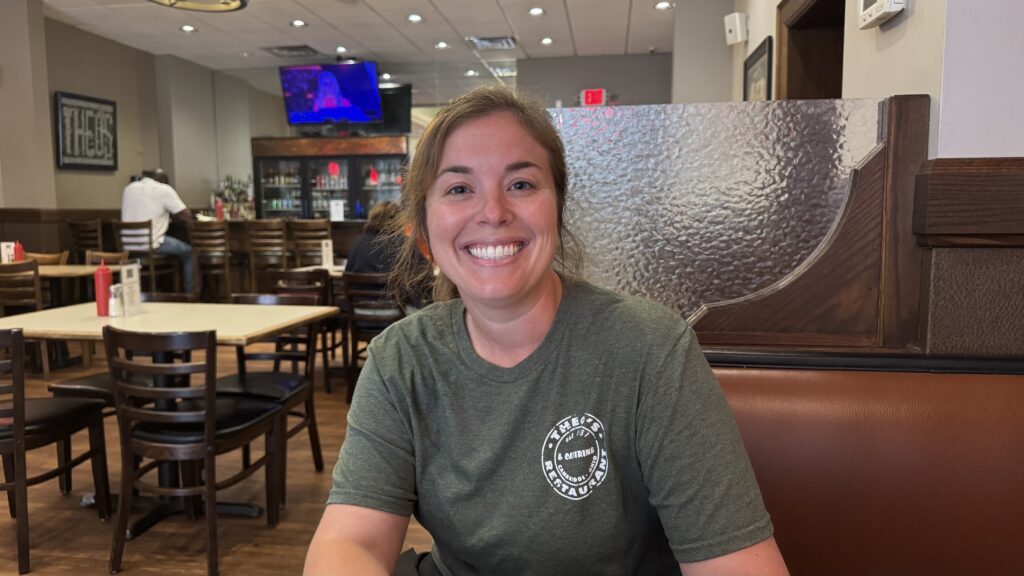
While I was in Cambridge, I ate at Theo’s Restaurant downtown. The food was excellent, and my server, Addy, may have been the best restaurant server I have ever had. I asked her about the local apartment market, and her opinion matched what I had found: Cambridge did not have many nice apartment communities.
Cambridge may not have provided the retirement housing answer I was looking for, but Theo’s and Addy were definite highlights of the trip.
Visiting a Full-Time Campground Community
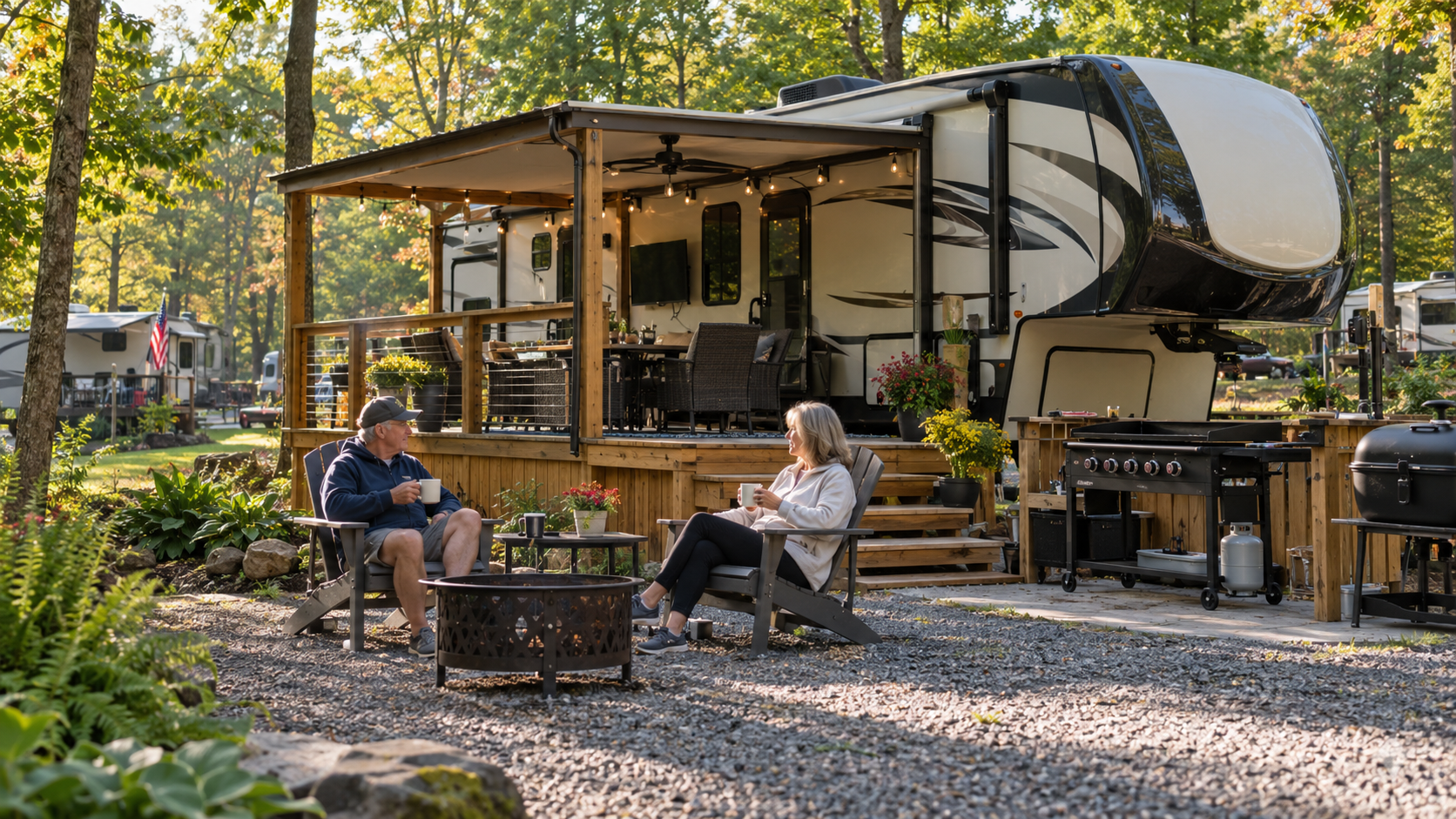
From Cambridge, I continued to Pennsylvania to visit my brother Frank and his wife, Patty. They live full-time in a 35-foot fifth-wheel camper at a seasonal campground.
Before visiting, I understood the basic arrangement. They owned a camper, rented a campsite, and spent less than they had while living in an apartment.
What I did not fully understand was the lifestyle surrounding it.
This was not simply a collection of RVs parked beside one another. It was a close community. People regularly traveled around the campground in golf carts, sometimes with no destination other than seeing who was outside.
They would stop and talk with practically everyone they passed. Frank and Patty call these spontaneous conversations “stop-and-chats.”
There were a lot of stop-and-chats.
And nearly every conversation eventually seemed to involve smoking meat. Someone was smoking pork, someone else was preparing chicken, and another neighbor had opinions about brisket. Grills, smokers, cooking times, and techniques were discussed with surprising seriousness.
I also ate extremely well while I was there.
What Does a Typical Day Look Like?
Frank and Patty usually wake up without an alarm clock, make coffee, and sit outside on their deck when the weather is pleasant. They listen to the birds and enjoy the quiet.
Weekdays tend to be peaceful. Weekends bring more campground activities and socializing.
Most of their cooking happens outside. Depending on the meal, they use a Blackstone griddle, grill, smoker, or open fire. Inside the camper, they mainly make coffee or use the microwave occasionally.
Their days are shaped by outdoor living: morning coffee, meal planning, cooking, golf-cart rides, conversations with neighbors, evening drinks, and sometimes cigars.
The camper may contain their bedroom, kitchen, and living area, but their home extends well beyond its walls.
VIDEO: Full-Time Campground Living Interview
In the video, Frank and Patty explain what campground living costs, which services are included, how they manage everyday needs, and what prospective full-time RV residents should research before making the move.
Is Campground Living Cheaper Than an Apartment?
Frank and Patty lived in an apartment for seven years before transitioning to full-time campground living. That experience gave them a realistic basis for comparing the two lifestyles.
They calculated the costs of a moderately priced camper, their seasonal campsite, utilities, and the extras they chose to add. According to their analysis, their campground lifestyle costs approximately 37.5% less than their former apartment.
That calculation includes the cost of their camper.
Their savings should not be treated as a universal guarantee. RVs range from inexpensive used models to luxury units that cost as much as a house. Campground rates, utility charges, maintenance expenses, and permitted improvements also vary widely.
In their case, buying reasonably and avoiding an elaborate RV helped make the numbers work.
This is also why housing deserves so much attention when planning retirement. In Why Housing Matters More Than Social Security in Retirement, I explain how housing decisions can affect a retirement budget more than many smaller expenses combined.
What Is Included in Their Campground Fee?
Their seasonal campground fee includes:
- Water
- Sewer
- Trash service
- Swimming pool access
- A recreation hall and game room
- Campground activities
Electricity is an additional expense.
The campground also provides Internet access, but it becomes less reliable when the campground is full. Because Frank and Patty stream television—and because reliable service was essential while Patty was still working—they chose to purchase their own Internet service.
Many other seasonal residents have reportedly done the same.
How Do They Handle Mail, Laundry, and Deliveries?
The practical details of campground living were much simpler than I expected.
Amazon packages can be delivered directly to the campground. Frank and Patty use a nearby post office box for regular mail. The campground laundry building is directly across from their site.
Multiple washers and heavy-duty dryers allow Frank to complete several loads in about an hour. Patty told me he has the system down to a science.
Food storage requires more planning because an RV does not offer the same refrigerator and pantry space as a traditional home. They have addressed that by adding an outdoor refrigerator and extra freezer space.
Does the Camper Feel Too Small?
Their former apartment was just under 1,100 square feet. Their fifth-wheel camper provides approximately 450 to 500 square feet inside.
That sounds like a substantial reduction, but they do not feel as though they gave up as much space as the numbers suggest.
Their camper has ample cabinets, dresser drawers, pantry storage, and closet space. Patty said the closet space may be close to what they had in the apartment.
They have also created substantial outdoor living space. Their site includes a deck and pavilion, a covered cooking area, and a storage shed that doubles as an entertainment space.
The outdoor space makes up for much of what they lost inside. Their experience illustrates a point I made when writing about downsizing without regret: successful downsizing is less about square footage than understanding what you actually need to live comfortably.
The Biggest Benefit May Be the Community
The 37.5% savings makes an excellent headline, but I do not believe it is the main reason Frank and Patty enjoy campground living.
The community may be even more valuable.
Frank describes himself as a hermit by nature, but campground living has made him more social. Neighbors regularly talk, eat together, exchange advice, and help one another.
He explained that if someone mentions needing assistance, half a dozen people may quickly arrive to help.
In some ways, the campground reminded me of The Villages in Florida. There were golf carts, scheduled activities, frequent conversations, meals with neighbors, and the sense that everyone knew everyone else.
It may have had even more stop-and-chats than The Villages.
For someone who wants an active social life, that closeness could be a major advantage. For someone who prefers more solitude, it could feel overwhelming. My thoughts on social life in retirement probably make it unsurprising that this much spontaneous interaction would not always be my cup of tea.
Campground Living Is Not for Everyone
Frank and Patty repeatedly emphasized the importance of research.
Campgrounds are not all alike. Some allow seasonal residents to build decks, pavilions, sheds, and outdoor cooking areas. Others do not. Amenities, rules, utility charges, Internet quality, and campsite sizes can vary considerably.
The camper itself requires just as much research.
A small camper may work perfectly for occasional weekends but become uncomfortable for full-time living. A very large RV may provide additional comfort but exceed the buyer’s budget or fail to fit within the desired campsite.
Before making a decision, potential full-time residents should consider:
- The total purchase or financing cost of the camper
- Seasonal or monthly campground fees
- Electricity and Internet charges
- RV insurance and maintenance
- Campground rules and permitted improvements
- Food, clothing, and general storage
- The amount of indoor and outdoor space needed
- Distance to healthcare, groceries, and other services
- Whether the social environment fits their personality
The lowest advertised campsite fee does not tell the entire story—just as the lowest advertised apartment rent did not tell the entire story in Cambridge.
Wyomissing Hills Felt More Like Me
During my visit, Frank drove me to Wyomissing Hills, where he and Patty previously lived in an apartment.
My reaction was immediate: this was much more my speed.
Restaurants, stores, and other conveniences were within walking distance. It offered a more traditional home, greater privacy, and the ability to handle everyday errands without getting into a car.
Of course, their apartment cost considerably more than their campground lifestyle. That is the tradeoff.
They prefer the outdoor living, community, space surrounding their camper, and lower expenses. I prefer the convenience, privacy, and walkability of a neighborhood like Wyomissing Hills.
Neither choice is wrong. We simply value different things.
Affordable Retirement Housing Must Fit Your Life
This trip reinforced the importance of looking beyond price when choosing where to live in retirement.
In Cambridge, I found inexpensive apartments but nowhere I personally wanted to live. At the campground, I found a friendly and comparatively affordable community, but a lifestyle that probably would not fit me permanently. In Wyomissing Hills, I found the walkability and convenience I prefer—but at a higher price.
The amount of money someone needs for retirement depends heavily on housing, debt, dependable income, healthcare, and lifestyle. That is why there is no single correct number, as I discussed in How Much Money Do You Really Need to Retire?.
For Frank and Patty, campground living means outdoor cooking, golf-cart rides, friendly neighbors, stop-and-chats, and many conversations about smoking meat.
For me, the ideal may be a comfortable home with restaurants and stores nearby—and perhaps slightly fewer people stopping to discuss brisket.
The best retirement home is not automatically the cheapest one. It is the place that fits both your budget and the way you genuinely want to live.
Frequently Asked Questions About Campground Living in Retirement
Can you live in a campground full-time?
Some campgrounds allow full-time or extended seasonal living, while others limit the length of stays. Rules vary, so confirm residency restrictions, seasonal closures, permitted structures, mail policies, and utility arrangements before purchasing an RV or committing to a site.
Is campground living cheaper than renting an apartment?
It can be, but the answer depends on the camper, campground fees, utilities, maintenance, insurance, and local apartment prices. Frank and Patty estimate that their arrangement costs 37.5% less than their former apartment, including the cost of their camper. Their experience is one example rather than a guarantee.
What expenses come with full-time RV living?
Potential expenses include the RV purchase or loan, campsite fees, electricity, Internet, insurance, repairs, propane, maintenance, laundry, and improvements to the site. Some campgrounds include water, sewer, trash service, and recreational amenities.
Is a fifth-wheel camper large enough for two people?
Frank and Patty are comfortable in their 35-foot fifth wheel, which provides approximately 450 to 500 square feet. Their deck, pavilion, outdoor kitchen, shed, and additional storage also make the living arrangement feel more spacious.
Who is campground living best suited for?
It may suit retirees who enjoy nature, outdoor cooking, casual social interaction, campground activities, and a close community. People who value privacy, substantial indoor space, or a highly walkable urban environment may prefer another housing option.
Would you consider living full-time in a campground, or would you prefer a traditional apartment in a walkable neighborhood? Share your thoughts in the comments.
