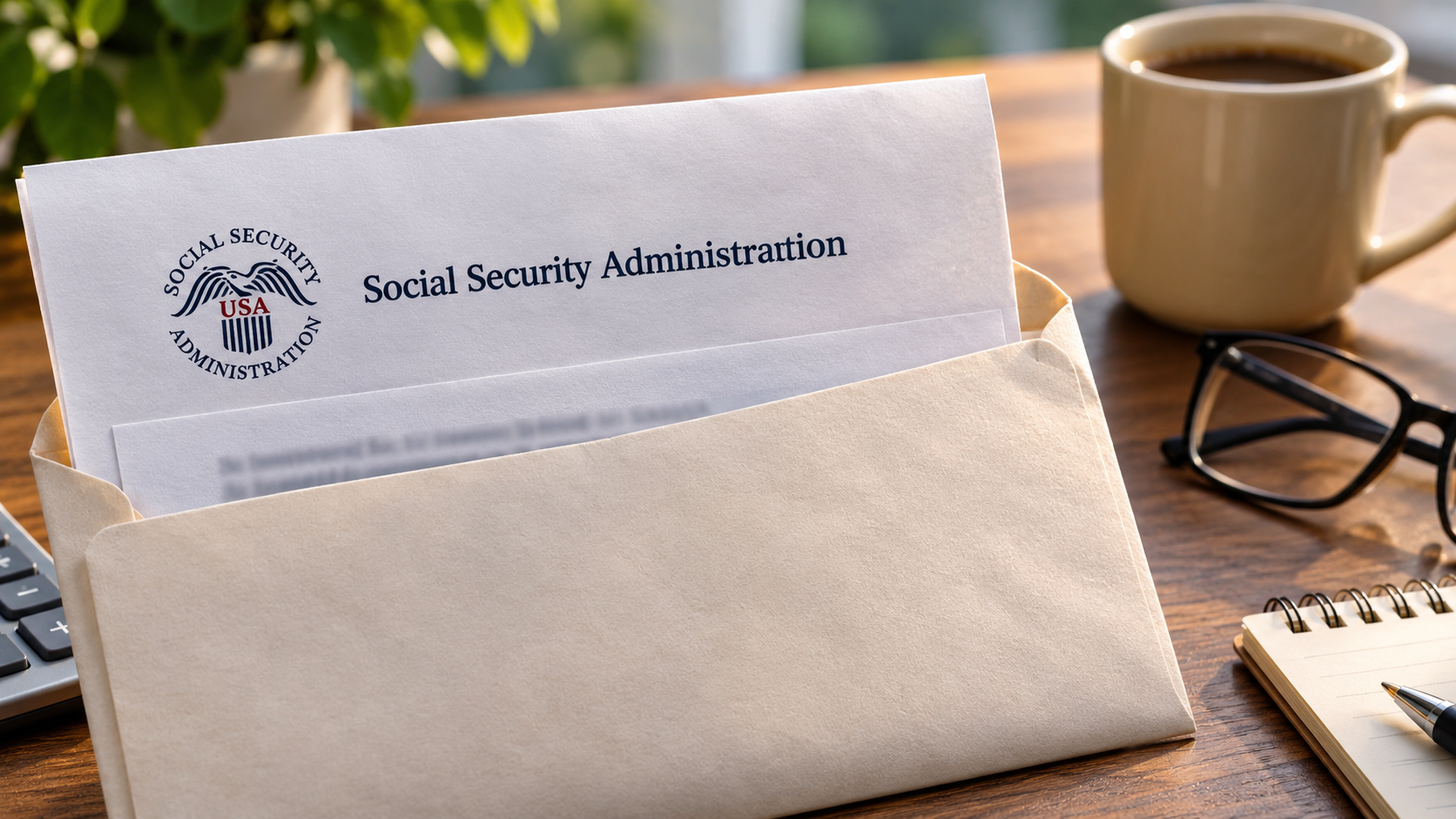
A few weeks ago, I received a letter from Social Security telling me my monthly benefit was increasing by $133.
And no, this wasn’t the annual cost-of-living adjustment (COLA).
It was a completely separate increase.
I’ll admit, I was surprised. I had always assumed that once Social Security calculated your retirement benefit, that was pretty much it. You’d receive your annual cost-of-living adjustments, but the underlying benefit amount wouldn’t change.
Apparently, there’s more to the story.
That letter led me to discover something I think a lot of retirees might not realize:
Working after you start collecting Social Security can sometimes increase your monthly retirement benefit—even if you started collecting at age 62.
And we’re not necessarily talking about going back to a full-time job. Part-time employment, consulting, and qualifying self-employment earnings can potentially count too.
The interesting question is whether knowing this might change someone’s decision about working in retirement.
Watch: Can Working After Taking Social Security Increase Your Check?
In the video, I explain the letter I received, what I discovered about Social Security recalculations, and why additional earnings might matter more for some retirees than others.
My Unexpected $133 Social Security Increase
The letter I received explained that Social Security had changed my benefit amount to give me credit for earnings from 2025 that hadn’t previously been included in the calculation.
Here’s the part that really surprised me.
My reported Social Security earnings for 2025 were only $593.
Yet the letter informed me that my monthly benefit was increasing by $133.
That’s an additional $1,596 per year.
Now, I want to make something clear.
I don’t know exactly how Social Security arrived at that increase. I’m certainly not suggesting that earning $593 will automatically increase anyone’s benefits by $133 a month.
The letter established that additional earnings were credited, but it didn’t provide a complete explanation of the calculation.
Still, it got me curious.
I started researching how Social Security handles earnings after someone begins receiving benefits.
And I discovered that the Social Security Administration reviews the earnings records of people who continue working while collecting benefits.
If those earnings improve their benefit calculation, Social Security can increase their monthly payment.
This isn’t a special program or a loophole. It’s part of how the system works.
Can Working Part-Time Increase Social Security After Age 62?
Yes. Working part-time after claiming Social Security at 62 can potentially increase your retirement benefit.
But an increase isn’t guaranteed.
When someone starts collecting Social Security at 62, their benefit is reduced because they claimed before full retirement age.
That early-claiming reduction doesn’t simply disappear because they go back to work.
However, Social Security can still consider additional earnings when calculating their benefit.
If those earnings improve the calculation, their monthly benefit may increase.
And that increase can become part of their ongoing benefit rather than being a one-time payment.
This matters because many people focus almost entirely on the Social Security earnings limit when deciding whether to work.
They know that earning too much before full retirement age can result in benefits being withheld.
What they might not realize is that the same work could potentially improve their future benefit amount.
Those are two separate considerations, and both deserve attention.
How Social Security’s 35-Year Earnings Rule Works
To understand why working after retirement might increase your benefits, you need to know a little about how Social Security calculates retirement payments.
For most workers, Social Security uses their highest 35 years of earnings, adjusted for changes in average wages over time.
But what happens if you didn’t work for 35 years?
Maybe you spent several years raising children.
Perhaps you experienced periods of unemployment.
Or maybe you operated a business that had several years of very low earnings.
If you have fewer than 35 years of earnings, Social Security generally includes zeros for the missing years.
Even if you worked for 35 years or more, some of those years might have been relatively low-paying.
That’s where additional work can potentially make a difference.
An Example: Returning to Work After Claiming Social Security
Imagine someone who started collecting Social Security at age 62.
They have several years in their earnings history when they made little or no money.
At age 64, they decide to take a part-time job earning $20,000 annually.
If that new year of earnings is high enough to replace one of the lower years in their benefit calculation, Social Security may recalculate their monthly benefit.
The increase might be small, but it could continue in future monthly payments.
And if that person continues working, additional qualifying earnings years might lead to further increases.
However, someone with 35 years of substantially higher earnings might not see any increase from the same $20,000 part-time job.
That’s why two people earning exactly the same amount in retirement could have very different results.
The key isn’t simply how much you’re earning today.
It’s how those earnings compare with the years already being used to calculate your benefits.
You can read more about Social Security’s calculation directly on the Social Security Administration’s retirement planning website.
Why Some Retirees Might Benefit More Than Others
I started thinking about this after talking with my brother Frank.
Frank began collecting Social Security at 62 and continued working at Walmart.
He paid close attention to the earnings limit because he didn’t want Social Security withholding part of his check.
I asked whether his monthly benefit had ever increased because he continued working.
He told me he didn’t remember receiving an increase like that.
Of course, I don’t know his complete earnings history, so I can’t say whether his Walmart earnings qualified him for a recalculation.
But his experience raises an interesting point.
Someone who worked for 40 years at relatively high wages might not improve their benefit calculation by taking a lower-paying part-time job.
Meanwhile, someone who spent years outside the workforce could have more opportunity to replace low-earning or zero-earning years.
That could include people who raised children, experienced extended unemployment, or had inconsistent self-employment income.
It doesn’t mean every person with gaps in their work history will receive an increase. And some people may receive spousal or survivor benefits, which involve additional rules.
But it’s one more reason to understand your own earnings record rather than assuming everybody’s Social Security situation works the same way.
What Is the Social Security Earnings Limit in 2026?
Here’s where things can get confusing.
You can collect Social Security retirement benefits and continue working, but if you haven’t reached full retirement age, your earnings may affect how much Social Security pays you during the year.
For 2026, the rules are:
| Situation | 2026 earnings limit | Benefit withholding |
|---|---|---|
| Under full retirement age all year | $24,480 | $1 withheld for every $2 above the limit |
| Reaching full retirement age during 2026 | $65,160 before the month you reach full retirement age | $1 withheld for every $3 above the limit |
| At or beyond full retirement age | No earnings limit | No withholding under the retirement earnings test |
What Happens If You Earn $30,000?
Suppose you’re under full retirement age for all of 2026 and earn $30,000 from a job.
That’s $5,520 above the annual limit.
Social Security would generally withhold $2,760 in benefits under the earnings-test rules.
That might discourage someone from working.
But there’s another important part of the story.
When you reach full retirement age, Social Security adjusts your benefit calculation to account for months when benefits were withheld because you earned too much.
This isn’t the same as receiving a refund of every dollar withheld. Instead, your monthly benefit is adjusted going forward.
And this adjustment is separate from any increase caused by additional earnings replacing lower earnings years.
You can learn more in the Social Security Administration’s guide to receiving benefits while working.
Does Self-Employment Income Count Toward Social Security?
It can.
You don’t necessarily need to return to a traditional job for additional earnings to count.
Qualifying earnings might come from:
- Part-time employment
- Consulting or freelance work
- A small business
- Delivery or gig work
- A monetized YouTube channel
- Other qualifying self-employment activities
For employees, Social Security generally considers covered wages.
For self-employed individuals, qualifying net earnings are what matter—not simply the business’s total revenue.
For example, a small business might bring in $30,000 in revenue but have $20,000 in deductible business expenses.
You wouldn’t automatically treat the full $30,000 as Social Security earnings.
And not every type of income counts.
Pensions, investment dividends, savings account interest, and most ordinary rental income generally don’t count as covered earnings for this purpose.
That distinction is important.
I’ve explored different ways of generating income since leaving traditional employment, including the experience I shared in How I Hit $1,000 a Month in Retirement.
But the point here isn’t that everybody needs a side hustle.
It’s that qualifying earnings from different kinds of work may potentially affect future Social Security benefits.
Does Social Security Automatically Recalculate Your Benefits?
This was one of my biggest questions.
If additional earnings qualify you for a higher benefit, do you have to contact Social Security and request a recalculation?
Generally, no.
The Social Security Administration says it reviews the earnings records of beneficiaries who continue working.
If the new earnings qualify for a higher benefit, the agency generally recalculates the amount automatically.
According to Social Security, qualifying increases are retroactive to January of the year after the earnings occurred.
That doesn’t necessarily mean the increase appears in your January payment. Processing can take additional time.
If an increase is due, Social Security should account for the applicable effective date.
And when your benefit amount changes, the agency sends a notice explaining the adjustment.
In fact, Social Security’s official FAQ about working while receiving benefits specifically explains that additional earnings can lead to a higher monthly payment.
If you believe your earnings record is incorrect or an expected adjustment hasn’t occurred, you can contact Social Security for clarification.
Should You Go Back to Work to Increase Your Social Security?
That’s where I think people need to be careful.
The possibility of a higher Social Security benefit doesn’t automatically make returning to work the right decision.
There are several things worth considering.
How much additional income will the job provide?
Will your earnings cause benefits to be withheld before full retirement age?
What about income taxes?
Will working create transportation expenses or other costs?
Could the additional income affect other benefits you receive?
And perhaps most importantly, do you actually want to work?
After ten years away from traditional employment, I value having control over my time.
I’ve explained my thinking in Why I Will Not Get a Job in Retirement.
That doesn’t mean I don’t want to earn money. It means I don’t want to return to the same kind of work schedule I left behind.
Other retirees feel differently.
Some enjoy working part-time because it provides structure and social interaction.
Others need the additional income.
And some would rather reduce expenses than return to work.
There’s no universal answer.
I explored that broader question in I Retired With No Savings… and Nothing Really Changed, where I discussed how money and everyday life don’t always relate in the ways we expect.
The important thing is making your decision with a clear understanding of the financial consequences.
How to Check Your Social Security Earnings History
If you’re considering working after claiming Social Security, one of the most useful things you can do is review your earnings record.
Here’s where I’d start.
- Visit my Social Security and sign in to your account.
- Find your earnings history and review the wages or self-employment earnings recorded for each year.
- Look for years with little or no reported earnings, and check whether the amounts are accurate.
- If you’re considering additional work, ask Social Security how those earnings might affect your particular benefit.
Remember, finding a few zero years doesn’t automatically mean a part-time job will increase your check.
Social Security uses an indexed earnings calculation, and the amount of any potential increase depends on your circumstances.
But checking your record is a useful starting point.
It’s also worth remembering that you don’t need to work simply because an increase might be possible.
Retirement is about more than maximizing every possible dollar.
Frequently Asked Questions
Can you increase Social Security benefits after claiming at 62?
Yes. Additional covered earnings can potentially increase your monthly retirement benefit if they improve your benefit calculation. Claiming early doesn’t prevent future earnings-based recalculations.
Will working part-time automatically increase my Social Security?
No. Your new earnings must improve the calculation used to determine your benefit. If they don’t replace a lower earnings year or otherwise qualify for an increase, your benefit may remain unchanged.
Does Social Security recalculate benefits every year?
Social Security generally reviews the earnings records of beneficiaries who continue working and automatically recalculates benefits when qualifying earnings justify an increase.
Can you work after full retirement age without losing Social Security benefits?
Yes. Once you reach full retirement age, the retirement earnings limit no longer applies. Your wages won’t cause benefits to be withheld under that earnings test, although taxes and other considerations may still apply.
Does earning money from a side hustle increase Social Security?
It can, if the income represents qualifying covered earnings, such as net earnings from self-employment, and those earnings improve your benefit calculation. Simply receiving money from investments or other non-work sources generally doesn’t have the same effect.
How much will my Social Security increase if I work part-time?
There’s no fixed amount. The result depends on your earnings history, the amount of your new covered earnings, and Social Security’s benefit calculation. Some people may receive small increases, while others receive none.
Final Thoughts: Something I Wish I’d Known Earlier
When I opened that letter from Social Security, I was simply happy to learn I’d be receiving another $133 a month.
I certainly wasn’t expecting it to lead me into researching how work affects Social Security benefits.
But the more I learned, the more I wondered how many people might be making retirement decisions without knowing this possibility exists.
Maybe someone started collecting at 62 and decided not to work because they were worried about the earnings limit.
Maybe someone has years of low earnings and doesn’t realize that additional work could potentially improve their benefit.
Or maybe someone is already working and has no idea that Social Security reviews their earnings record for possible increases.
I’m not suggesting anybody should return to work just to chase a small increase in their Social Security check.
But I do think people deserve to understand the rules before making that decision.
Your Social Security benefit isn’t necessarily frozen just because you’ve started collecting it.
And that was something I genuinely didn’t know until I received that unexpected letter.
Now I’m curious about your experience.
Have you continued working after claiming Social Security? Have you ever received a letter telling you your benefits were increasing because of additional earnings?
I’d love to hear about it in the comments.
About the Author: I’m Don Romans, creator of Retired and Trying. I left traditional employment in 2016 and share my experiences navigating retirement, Social Security, money, and everyday life. This article reflects my personal experience and information published by the Social Security Administration. It is not individualized financial, tax, or legal advice.
