I’ve always considered myself pretty good with money.
Not because I’ve made brilliant investments or accumulated a large retirement portfolio. Quite the opposite. I’m simply cheap when it comes to everyday spending.
I’ve never owned a sugar canister. The sugar already comes in a perfectly good bag, so why would I buy another container to put it in?
I’ve never understood spending money on a decorative holder for a toilet plunger, either. It’s a toilet plunger. It doesn’t need its own furniture.
I’ve kept the same furniture for years, and I don’t replace things simply because something newer comes along.
But at almost 67 years old, I’ve finally recognized something about myself.
I’ve been extremely careful about spending small amounts of money while making major financial decisions that may have cost me thousands of dollars.
And I think I’ve finally figured out why.
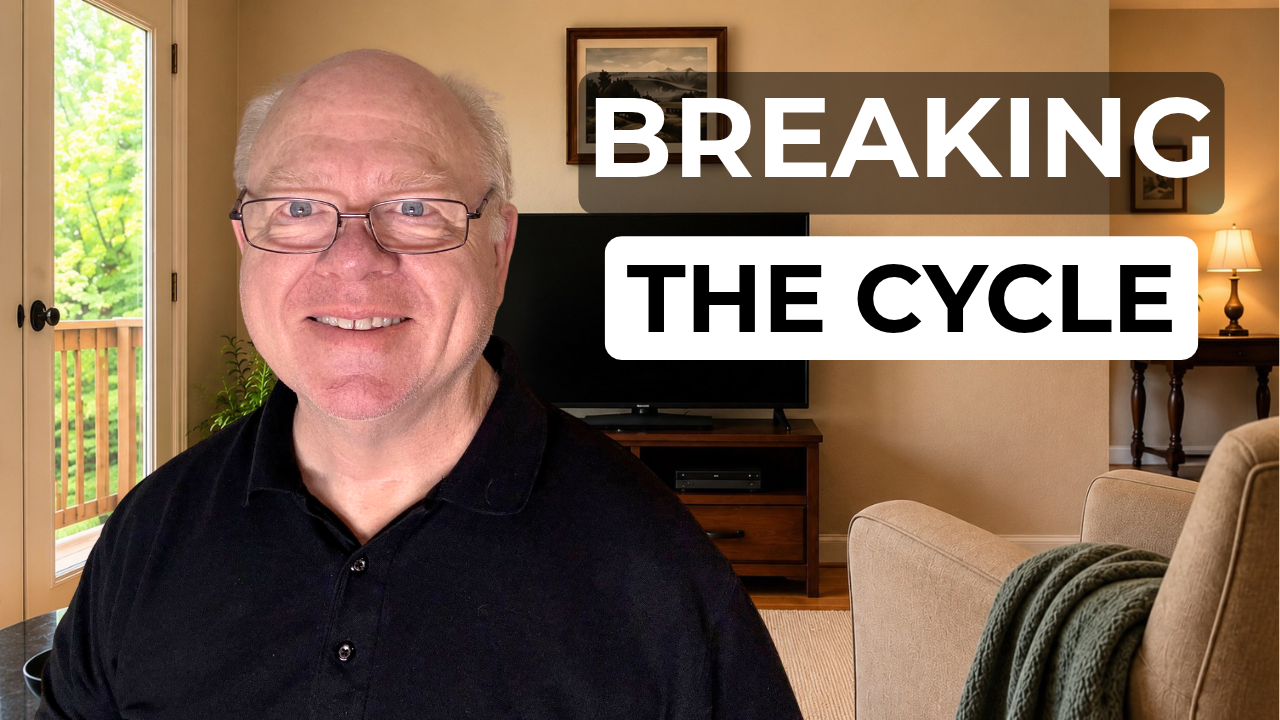
Watch: Finally Breaking My Worst Money Habit in Retirement
In this video, I explain how a frustrating night with noisy neighbors made me recognize a financial pattern I’ve repeated throughout my life.
How Noisy Neighbors Almost Led to Another Financial Decision
I live in a small condo that I own, and for the most part, it’s a comfortable place to spend retirement.
But there’s one problem.
Noisy neighbors.
Sometimes it’s the people downstairs. Other times, it’s the people upstairs walking around, moving furniture, or making enough noise that I have trouble sleeping.
After one particularly frustrating night, I found myself thinking something I’ve thought many times before.
That’s it. I’m selling this place.
I’ll buy a little house somewhere. I won’t have anyone living above or below me. I’ll finally have some peace and quiet.
And when I’m frustrated enough, I can convince myself that selling the condo is the only reasonable solution.
But then I started thinking about what that decision would actually mean.
I own my condo without a traditional mortgage. I do have a home equity line of credit that I’m working to pay off, but eventually that debt will be gone.
Why would I voluntarily take on a new mortgage at almost 67 years old because somebody upstairs is making too much noise?
I’ve written before about why retirement mistakes can be more expensive than we realize. When you’re no longer working, recovering from a major financial setback can be much more difficult.
And here I was, considering another major change.
Sometimes the Smallest Solution Is the One We Overlook
Here’s what makes the whole situation almost comical.
I’ve had a container of foam earplugs sitting beside my bed for years.
I don’t particularly like using them because they’re aggravating to put in. You have to roll them between your fingers and get them into your ears before they expand.
So I usually don’t bother.
But after that miserable night, I decided to try them again while taking a nap.
And they actually worked pretty well.
I’ve also experimented with playing brown noise through my hearing aids to help mask some of the sounds coming from neighboring condos.
And I’ve ordered another style of earplugs to try.
Will these things completely solve the problem? I don’t know.
But isn’t it interesting that I was willing to consider selling a home worth more than $100,000 before exhausting a few inexpensive solutions?
I was looking for a major solution to a problem that might be manageable with a minor adjustment.
That realization got me thinking about other decisions I’ve made.
I’ve Repeated the Same Pattern With Cars
My current vehicle is a leased Honda HR-V.
Every so often, I start thinking about how much money I’m spending on the lease payment, insurance, and other expenses.
I’m retired. I don’t commute to work. I don’t drive nearly as much as I used to.
So I start doing the math.
What if I got rid of the car?
I could save hundreds of dollars every month.
I’ve actually lived without a car before, so I know it’s possible.
But then I remember what I gave up.
Spontaneous trips to the park. Visiting my grandchildren whenever I felt like it. Simply getting in the car and going somewhere without planning transportation.
Then I start considering other possibilities.
Maybe I should buy out the lease. Maybe I should get a different vehicle. Maybe I should keep what I have.
I’ve written about my experience leasing a car in retirement and why predictability sometimes matters more to me than finding the absolute cheapest option.
But there’s another lesson I’m beginning to appreciate.
Just because I can change something doesn’t mean I need to change it today.
My current lease has an end date. I can make a decision when that time comes instead of constantly reconsidering everything.
The Financial Cost of Starting Over
When I look back over my working years, I recognize the same behavior.
I’ve had good jobs, including positions that paid well. I’ve also owned businesses and pursued opportunities because I believed they might improve my financial situation.
Sometimes they did.
Other times, things didn’t work out the way I’d hoped.
I’ve bought houses, sold houses, had a house built, and eventually returned to the condo where I live today.
Not long ago, I drove past the first house I ever owned.
It made me wonder what my financial situation might look like today if I’d been able to stay there all those years.
Of course, some changes were unavoidable. Life doesn’t always give us the option of staying where we are.
But I wonder how many times I made a change because I was convinced something better was waiting around the corner.
And how much did those changes ultimately cost?
Selling property involves expenses. Moving costs money. Changing vehicles can create new financial obligations. Starting a business can consume savings that take years to replace.
When we make those decisions, we’re usually thinking about the benefits.
We don’t always give enough consideration to what we’re leaving behind.
That’s part of the story I shared in how I went from being debt-free at 56 to owing money again in retirement.
It wasn’t one enormous mistake. It was a series of decisions and expenses that gradually changed my financial situation.
Why Dave Ramsey’s Baby Steps Finally Make Sense to Me
I’ve listened to Dave Ramsey talk about his Baby Steps approach to personal finance.
I don’t necessarily agree with everything he recommends, but the underlying idea makes sense.
You work on one financial goal. You accomplish it. Then you move to the next.
You keep making progress over time.
There’s nothing particularly exciting about it.
And I think that’s been my problem.
I’ve understood the importance of patience, but I’ve often wanted to skip ahead.
Instead of steadily improving my financial situation, I’ve looked for a major change that might get me there faster.
Sell the car.
Sell the condo.
Move somewhere cheaper.
Start another business.
There’s always another possibility.
I’ve been so busy looking for ways to get ahead faster that I may have repeatedly set myself back.
And that’s a difficult realization when you’ve spent your whole life thinking of yourself as someone who’s careful with money.
Being Frugal Isn’t the Same as Being Financially Disciplined
This might be the biggest lesson I’ve learned.
Being frugal is relatively easy for me.
I don’t buy things I don’t need. I’m not particularly interested in keeping up with the neighbors. I’m happy living with furniture I’ve owned for years.
But financial discipline involves more than avoiding unnecessary purchases.
It also involves patience, consistency, and understanding the long-term consequences of major decisions.
Think about it.
I might save $10 by not buying a sugar canister.
I might save $20 by passing up something I don’t really need.
But how many little purchases would I have to avoid to recover from a financial decision that cost me $10,000 or $20,000?
Quite a few.
I’ve been disciplined about small expenses while sometimes being impatient about much larger financial decisions.
And those larger decisions can have consequences that last for years.
That’s particularly important when you’re retired and living primarily on Social Security.
There’s less room to recover from expensive experiments.
Maybe I Already Have the Retirement Plan I Need
When I look at my current situation, I realize something encouraging.
I already have a plan.
I receive Social Security every month, and my YouTube channel provides additional income.
I own my condo, and I’m working on paying off the remaining home equity loan.
I’m also trying to build my emergency savings.
If I continue doing those things, my financial position should gradually improve.
I don’t need to sell my condo to accomplish that.
I don’t need to move somewhere else.
I don’t need to come up with another business idea or make some dramatic financial change.
I simply need to keep following the plan.
One of the biggest reasons I’ve been able to enjoy retirement without a large investment portfolio is that I’ve kept my housing expenses manageable.
Taking on a new mortgage could undo some of that advantage.
And for what?
Possibly to solve a problem I haven’t fully explored other ways of managing.
That doesn’t mean I’ll never move.
If the noise becomes unbearable and reasonable solutions don’t work, moving might eventually make sense.
But I want that decision to come from careful consideration rather than frustration after another sleepless night.
Three Questions I’m Learning to Ask Before Making a Big Financial Change
I’m not suggesting that everyone should stay in the same house, keep the same car, or avoid taking financial risks.
Sometimes change is necessary.
But I’m learning to ask myself a few questions before making another major decision.
1. Am I solving a real problem or reacting to frustration?
A terrible night with noisy neighbors can make selling my condo seem like a wonderful idea.
But how will I feel about that decision after a good night’s sleep?
2. Have I tried the simpler solutions?
Before taking on a mortgage, maybe I should see whether earplugs and background noise make my current home more comfortable.
Before getting rid of my car, maybe I should consider whether the freedom it provides is worth the monthly expense.
3. What happens if I do absolutely nothing?
This is probably the most important question.
If I keep paying down my HELOC, continue building savings, and avoid taking on new obligations, where might I be three or five years from now?
Sometimes doing nothing isn’t a failure to act.
Sometimes it’s giving a good plan enough time to work.
Breaking the Cycle in Retirement
I’ve been retired for about ten years now.
And one thing retirement gives you is time to reflect on the decisions you’ve made throughout your life.
I’ve had a good life. I’ve accomplished things I’m proud of. And I’ve managed to build a retirement that I enjoy.
I’m not sitting here regretting every decision I’ve ever made.
But I can recognize patterns that may have held me back financially.
And I can try to avoid repeating them.
At almost 67, I’m finally beginning to understand something I probably should have learned decades ago.
Sometimes the best financial decision is to do absolutely nothing.
Not because you’re afraid to make a change.
But because you’ve already got a reasonable plan, and constantly changing it may prevent you from ever seeing the results.
I’ve spent much of my life looking for ways to improve my financial situation by making big changes.
Now I’m wondering whether the best way forward is simply to stay the course.
And maybe that’s what breaking the cycle really means.
Not finding another shortcut.
Just learning to be patient.
What About You?
Have you ever sold a house, changed jobs, bought a car, or made another major financial decision because you thought it would improve your situation?
Did it work out, or did you eventually wish you’d stayed where you were?
I’d love to hear your experience in the comments.
And if you enjoy conversations about retirement, living on Social Security, and the lessons we’re still learning along the way, consider joining my free newsletter, The Trying Times.
Every Saturday, I share thoughts about retirement and life after work.
Because apparently, even at almost 67, I’m still learning.
