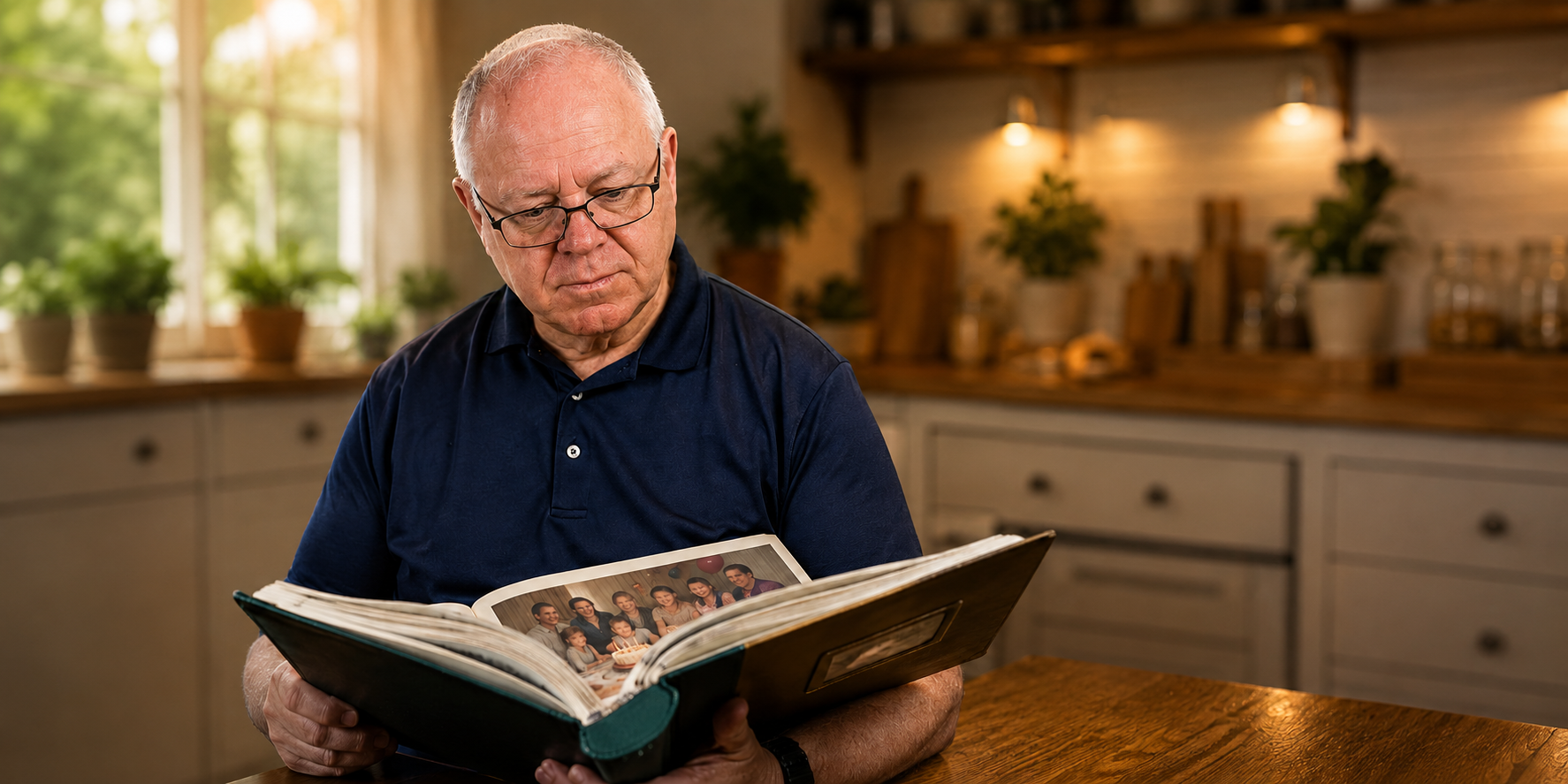
The other day I was eating dinner by myself. That isn’t unusual for me. I’ve eaten plenty of meals alone over the years, including long before I retired. But for some reason, that particular evening sent my thoughts somewhere I wasn’t expecting.
As I sat there, I found myself thinking about dinners at my mother’s house. Not one specific dinner, but all of them. The house would be full of people. There was always plenty of food, plenty of noise, and plenty of conversations happening at the same time. Somebody would be laughing in the kitchen while someone else was telling a story at the table. Kids would be running around, people would be asking for seconds, and somehow my mother always managed to keep everything moving.
What struck me wasn’t the memory itself. It was the realization that I couldn’t tell you which family dinner was the last one.
I remember those gatherings vividly. I remember the feeling of walking into the house and knowing everyone would be there. I remember my mother bustling around the kitchen and family members talking over one another. What I don’t remember is the final dinner before that chapter of life quietly came to an end.
The older I get, the more I realize that many of life’s most meaningful moments don’t announce themselves when they’re happening. We assume there will be another holiday, another family gathering, another visit, another chance to sit around the table together. Then years pass, circumstances change, and one day we look back and realize that something we thought would always be there has quietly disappeared.
🎥 Watch the full video here
The Strange Thing About Getting Older
One of the unexpected parts of aging is how often it causes you to look backward. When we’re younger, life feels like it’s expanding. We’re focused on careers, raising families, paying bills, and planning for whatever comes next. Most of our attention is directed toward the future.
Retirement changes that in subtle ways. We still make plans, but we also spend more time reflecting. We begin noticing patterns in our lives that weren’t obvious when we were busy living them. We start realizing how many chapters have already closed and how few of them ended with any sort of warning.
I touched on this idea in my article, 10 Things Retirement Taught Me About Time. One of the lessons that surprised me most was how quickly entire decades can seem to disappear when viewed in the rearview mirror. Events that once felt far apart now seem like they happened yesterday. The years between them somehow collapsed into a handful of memories.
That shifting perspective on time changes how we view the past. It also changes how we value the present.
The Last Family Dinner
As I sat thinking about my mother’s house, another memory surfaced.
For years, I regularly had dinner with my daughter’s family. It wasn’t a holiday or a special occasion. It was simply part of life. The kids were younger then, and those dinners became one of the highlights of my week.
There was always something happening. Somebody had a story from school. Somebody else wanted to show me a drawing or tell me about a game they were playing. Sometimes my grandson would try to convince me to eat whatever food he didn’t want before his parents noticed. My granddaughter had her own ways of doing the same thing.
At the time, those dinners felt permanent. They felt like something that would continue indefinitely because that’s what routines do. They become part of the background of our lives.
Then life changed.
Families change. Children grow up. Relationships evolve. Schedules shift. Before long, those weekly dinners stopped happening.
And just like the dinners at my mother’s house, I couldn’t tell you which one was the last.
Why Ordinary Moments Become Extraordinary Memories
When people imagine the memories they’ll treasure later in life, they often think about milestones. Weddings, graduations, retirements, vacations, and anniversaries tend to get most of the attention.
Yet when I think about the moments I miss most, they usually aren’t the big events.
They’re the ordinary ones.
They’re conversations around a dinner table. They’re sitting on a porch drinking coffee. They’re family gatherings where nothing particularly remarkable happened. They’re the moments we rarely photograph because they seem too ordinary to preserve.
The funny thing is that those ordinary moments often become the most meaningful memories because they represent something deeper. They represent connection, belonging, familiarity, and the people who helped shape our lives.
I’ve noticed a similar pattern when talking with retirees about happiness. In my article about 10 Simple Habit Changes That Made Retirement Better, many of the improvements weren’t dramatic changes at all. They were small adjustments that created more opportunities for meaningful experiences. Happiness often grows from everyday moments rather than extraordinary ones.
The same is true for our memories.
Nobody Tells You This About Retirement
One thing I’ve learned from creating Retired and Trying is that many of the biggest lessons in retirement have very little to do with money.
Financial planning matters, of course. But some of the most significant adjustments involve relationships, identity, purpose, and time.
That’s one reason my video, If You’re In Your 50s or 60s, Don’t Make These Mistakes, resonated with so many viewers. Several of the mistakes weren’t financial mistakes at all. They involved ignoring small changes that eventually become significant. The same principle applies to relationships and experiences.
We rarely notice when a chapter is ending.
We’re too busy living it.
By the time we realize something important has changed, that season of life may already be behind us.
Appreciating the Moments We Have Now
At first glance, thinking about “last times” can feel a little sad.
But the older I get, the less I see it that way.
Instead, I see it as a reminder.
A reminder to pay attention.
A reminder to enjoy the conversation instead of rushing through it.
A reminder to say yes to the family gathering even when staying home sounds easier.
A reminder to call someone while I still can.
A reminder that the ordinary moments happening today may someday become the memories I treasure most.
None of us knows which gathering will be the last. None of us knows which conversation will be the final one or which tradition will quietly come to an end.
And honestly, that’s probably a good thing.
If we knew, we’d spend the entire experience worrying about losing it instead of enjoying it.
The goal isn’t to predict the last time.
The goal is simply to appreciate this time.
Looking Back Differently
One thing I’ve noticed is that retirement gives us the opportunity to see our lives as a collection of chapters rather than a series of individual events.
When I think about my mother’s house, I don’t think about one dinner. I think about years of dinners.
When I think about my grandchildren being little, I don’t think about one specific afternoon. I think about an entire season of life.
When I think about family gatherings, I don’t focus on a single holiday. I think about all the holidays that felt normal at the time.
That’s what makes the realization so powerful. The things we miss most are often the things we never expected to lose.
They were simply part of life.
Until they weren’t.
Final Thoughts
Perhaps that’s one of the strangest parts of getting older. We begin to understand that life isn’t defined only by major milestones. It’s also shaped by thousands of seemingly ordinary moments that quietly become important memories.
The family dinner.
The weekly visit.
The phone call.
The holiday gathering.
The afternoon with grandchildren.
Most of the time we don’t know we’re experiencing a “last time” while it’s happening.
We only recognize it years later when we look back.
And maybe that’s the lesson.
Not to worry about when something will end, but to appreciate it while it’s here.
Because the moments that feel ordinary today may someday become the memories we cherish most.
