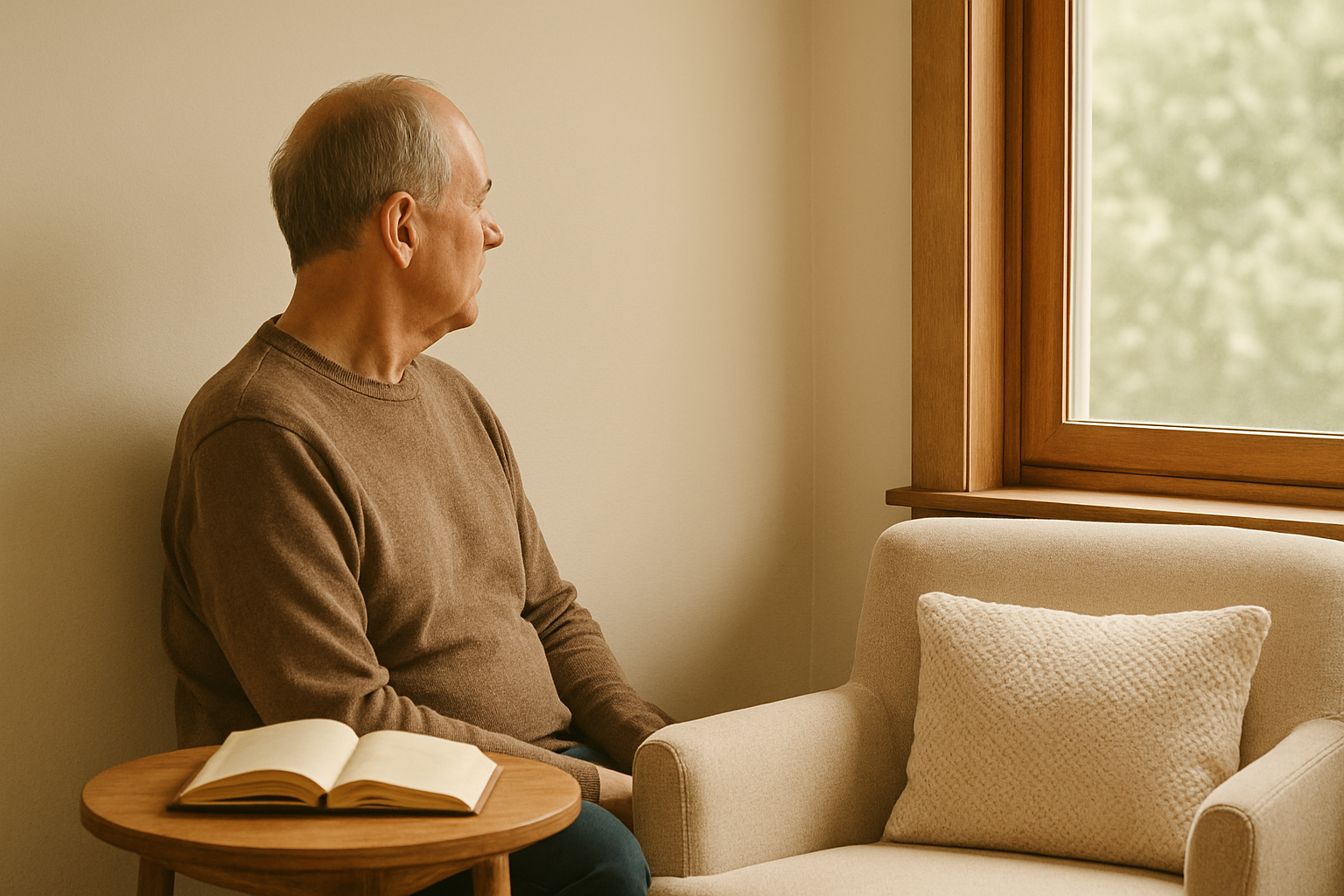
For most of my adult life, I lived in houses shaped by routines, responsibilities, and the quiet understanding that someone else’s needs were always part of the equation. Like many people, I moved from one phase of life to another without ever stopping to think much about solitude. Life was busy, structured, and purposeful, and whatever quiet moments existed were usually brief and quickly filled. Then, gradually and without much fanfare, I found myself living alone—and staying that way.
Living alone wasn’t something that suddenly began in retirement. I was divorced in the late 1980s, and from that point forward, solitude became part of my everyday life. I worked, stayed closely connected to my daughter as she grew up, and later became a grandfather. Life was full in ways that mattered. Even though I lived alone, I was rarely alone in the emotional sense. Solitude existed alongside responsibility, not instead of it, and it quietly blended into the background of a busy, working life.
It wasn’t until retirement that solitude truly changed its character.
When work ended, the structure that had quietly organized my days disappeared almost overnight. There was no commute, no imposed schedule, no automatic reason to be anywhere at a certain time. My daughter had her own family and routines, my grandchildren grew older, and while I’m still part of their world—taking a grandson to school or picking one up occasionally—those moments are brief. The rest of the day belongs to me. Not empty time, and not lonely time, but unclaimed time. That shift echoed something I later reflected on in The Unexpected Joys of Not Caring After 60, where quiet acceptance replaces the constant need to explain or justify how you live.
One of the first things solitude taught me in retirement is that it is not the same as loneliness. Loneliness feels like a lack, as if something essential has been taken away. Solitude feels like space—sometimes uncomfortable at first, but ultimately revealing. I used to assume silence needed to be filled, that quiet was something to escape. Living alone showed me otherwise. The absence of constant noise didn’t shrink my life; it gave it room to expand.
With fewer distractions, I began to hear my own thoughts more clearly. When you spend years responding to external demands, it’s easy to lose track of your inner voice. Decisions get made quickly, reactions become habitual, and reflection is postponed for later. Solitude removed much of that external pull. There were no background conversations, no competing routines, no pressure to keep pace. In that quiet, my thoughts surfaced naturally, without urgency or judgment.
At first, that clarity can be uncomfortable. When there’s no one to distract you, old questions and unresolved feelings tend to rise up. Solitude doesn’t hide anything. But if you stay with it long enough, something shifts. Those thoughts lose their edge. You stop fighting them and start understanding them. You notice patterns—what drains you, what steadies you, and what you’ve been carrying simply because life was busy enough to make it feel normal. Much of that awareness comes from noticing ordinary moments, the same kind of everyday details I explored in Want to Walk in Retiree Shoes?, where daily routines quietly shape how retirement actually feels.
Living alone also changes your relationship with peace. Modern life is very good at keeping us stimulated, even when we don’t need to be. Screens, notifications, background noise, and constant updates create the illusion of connection while quietly pulling us away from ourselves. When you live alone, distraction is still available, but it becomes optional. Over time, you realize how often noise is used to avoid stillness, and how much energy goes into keeping quiet at arm’s length.
As the days passed, silence stopped feeling awkward. I could sit in a quiet room without reaching for something to fill it. I wasn’t bored; I was present. That stillness became restorative rather than unsettling. Peace, I learned, doesn’t announce itself. It simply shows up when you stop running from quiet.
Time itself began to feel different. Without constant interruptions, days didn’t rush by unnoticed. Mornings unfolded at my own pace, shaped by how I felt rather than what was expected. Evenings weren’t about recovering from obligation but about easing into rest. I noticed small details more often—the way light shifts through a room, the comfort of familiar routines, the satisfaction of finishing simple tasks. Those slower rhythms align closely with what I wrote about in Slow Days, Smart Hustles, where independence and intention quietly meet.
Living alone also builds a steady, understated confidence. There’s no dramatic moment when you suddenly feel capable, but over time you trust yourself more. Decisions get made because there’s no one else to defer to, and problems get handled because they have to be. In dealing with them, you build confidence—not the loud kind, but the kind that settles in quietly and stays.
One of the more surprising effects of solitude is how it sharpens relationships rather than weakening them. Being alone doesn’t mean withdrawing from others. It clarifies which connections truly matter. Time spent with people becomes intentional rather than habitual. Conversations feel more meaningful. You listen better. You’re less reactive and more present. This reframing of space and connection reminded me of what I learned while downsizing, something I wrote about in What Nobody Warns You About Downsizing, where space becomes emotional as much as physical.
Family relationships evolve as routines change. Children build lives of their own. Grandchildren grow older. Living alone taught me to see these shifts not as loss, but as transformation. The moments I share with my grandchildren—school drop-offs, brief conversations—carry more weight because they’re not constant. They don’t fill my days, but they anchor them.
Perhaps the most important lesson solitude has taught me is comfort with myself. When there’s no one else around to distract or validate you, you’re left with your own company. At first, that can feel unfamiliar. Over time, you realize that being alone doesn’t have to feel incomplete. You can enjoy your own presence. You can sit quietly without needing to perform or explain. There’s a deep peace in that realization.
This kind of solitude doesn’t disappear when circumstances change. It becomes a practice, something you carry with you even when others are around. You learn how to pause before reacting, how to listen more carefully, and how to make choices based on what truly matters. These quieter rhythms show up even in the simplest routines, like those I shared in A Day in the Life of a Retired Grandpa, where presence matters more than productivity.
Looking back, I don’t see living alone as a void that needed filling. I see it as a space that taught me how to live more deliberately. Solitude didn’t take anything away from my life. It gave me clarity, steadiness, and a deeper sense of peace. And sometimes, the most meaningful changes don’t come from adding more, but from allowing life to be quiet enough to hear ourselves clearly.
